
Can acne scars be treated? The honest version.
Yes — but not by one treatment, and not quickly. Acne scarring is four or five different problems sitting on the same face, each with its own architecture under the skin. The single decision that determines your result is whether each scar type is matched to the tool designed for it.
- 01 Yes — substantially.Most people achieve around 50–70% improvement over a course of treatment.
- 02 Improvement, not erasure.Nobody achieves flawless skin, and any clinic implying otherwise is overselling.
- 03 More than one treatment type.Because most people have more than one type of scar.
- 04 Months, not weeks.Collagen remodelling continues for 6–12 months after your last session.
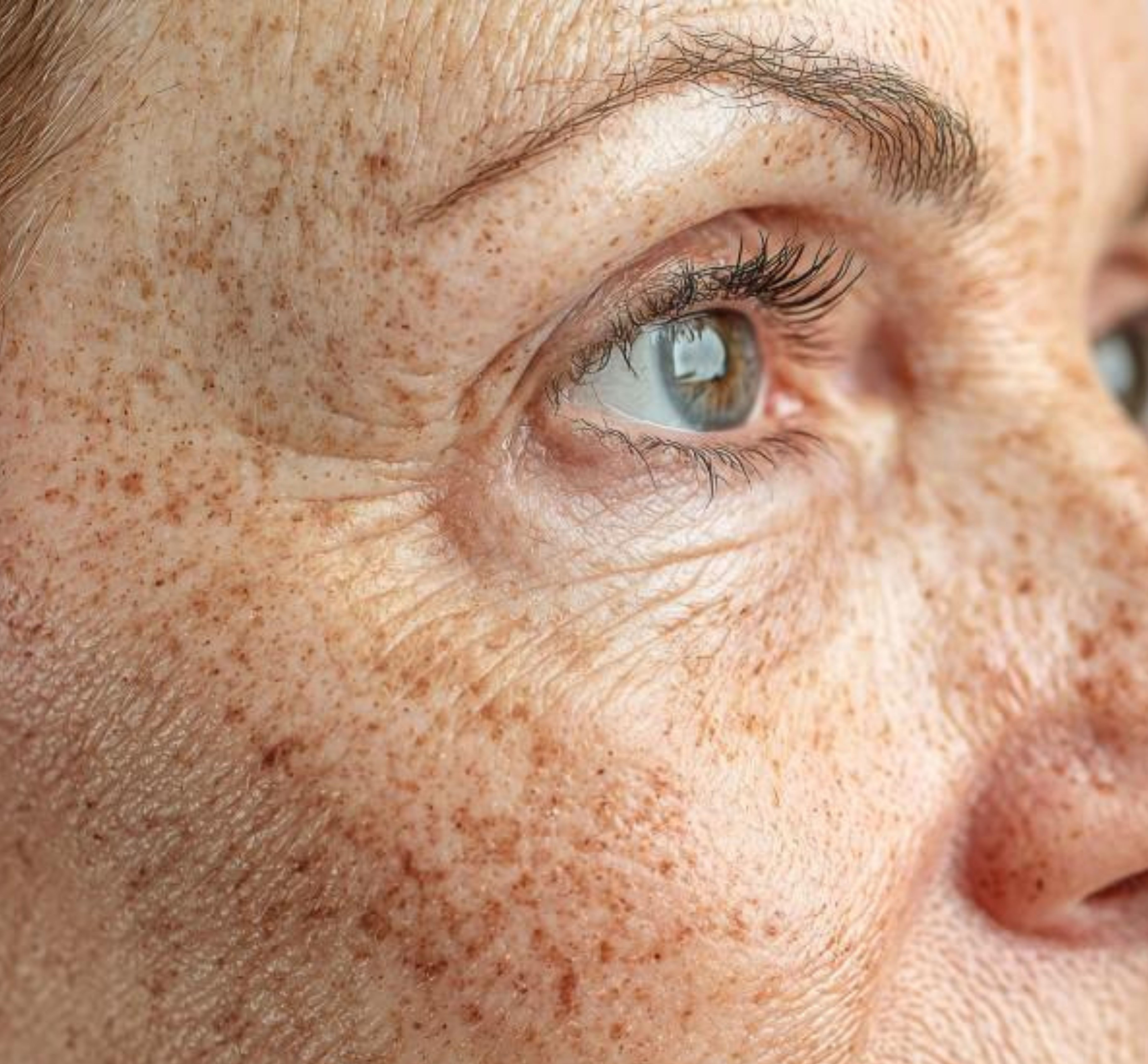
- 05 Some of it isn’t scarring.Flat red or brown marks are discolouration, not scar tissue — and they often fade on their own.
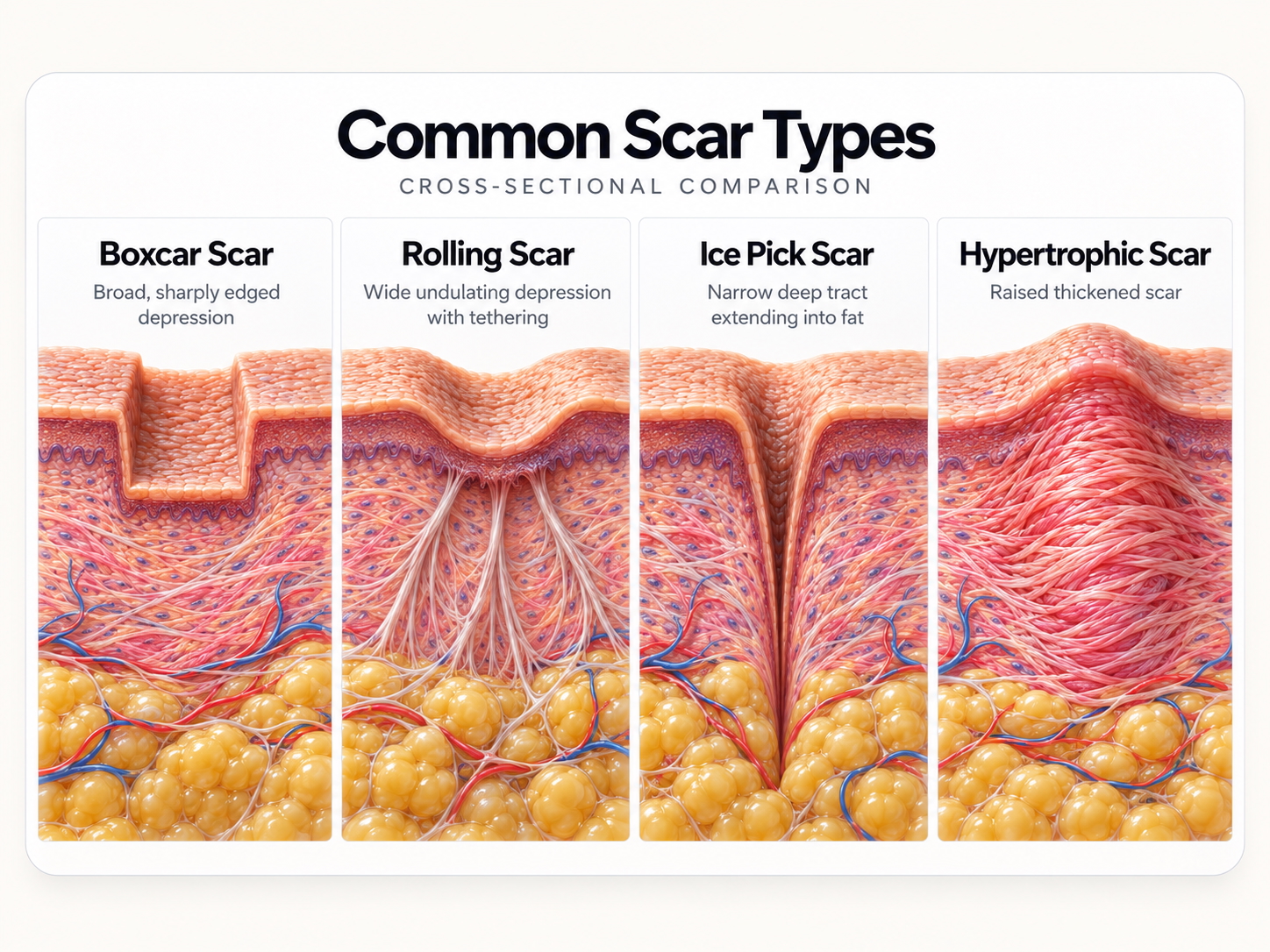
Which kind of scarring do you have?
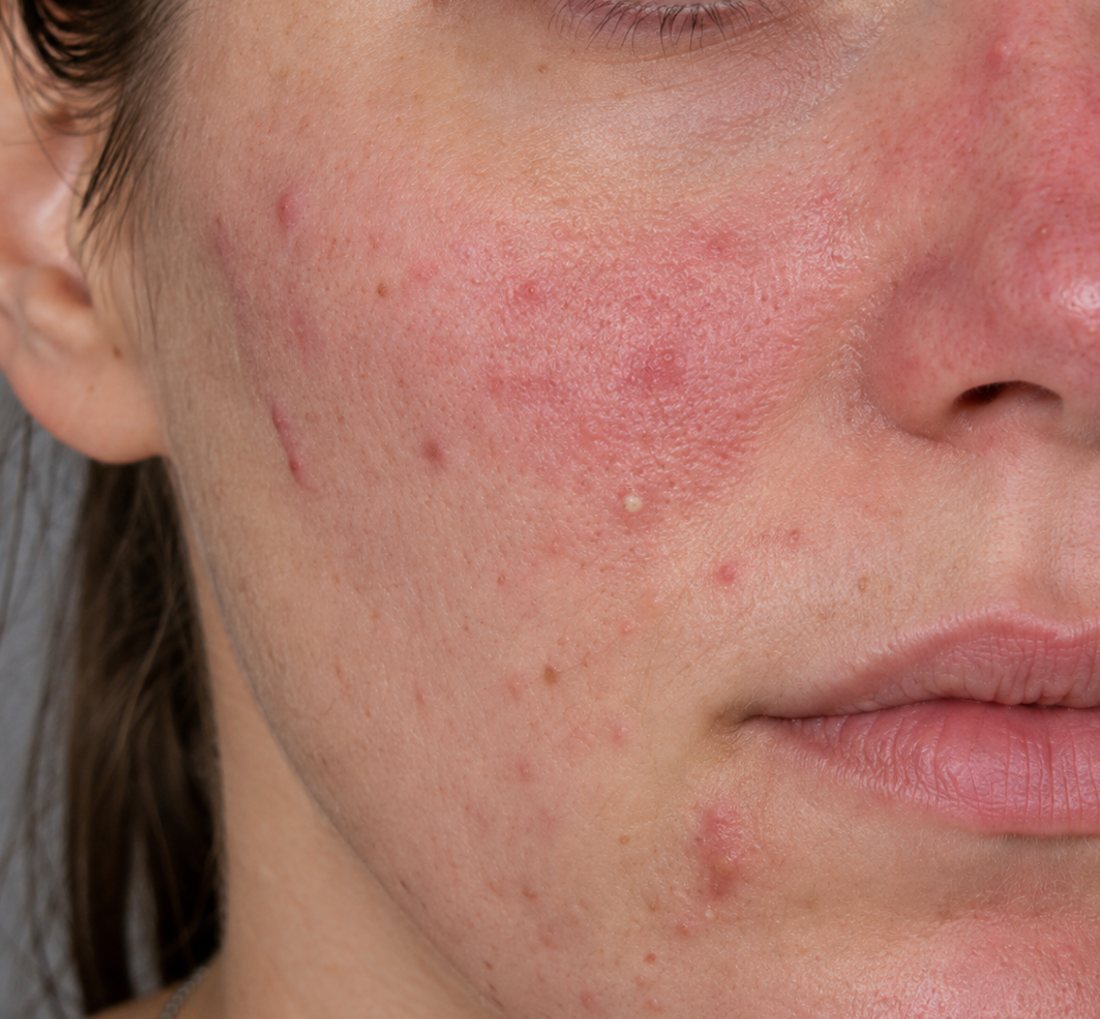
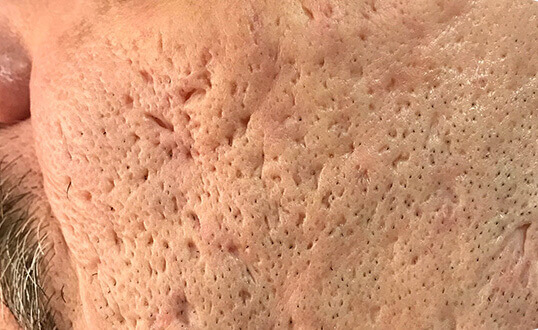
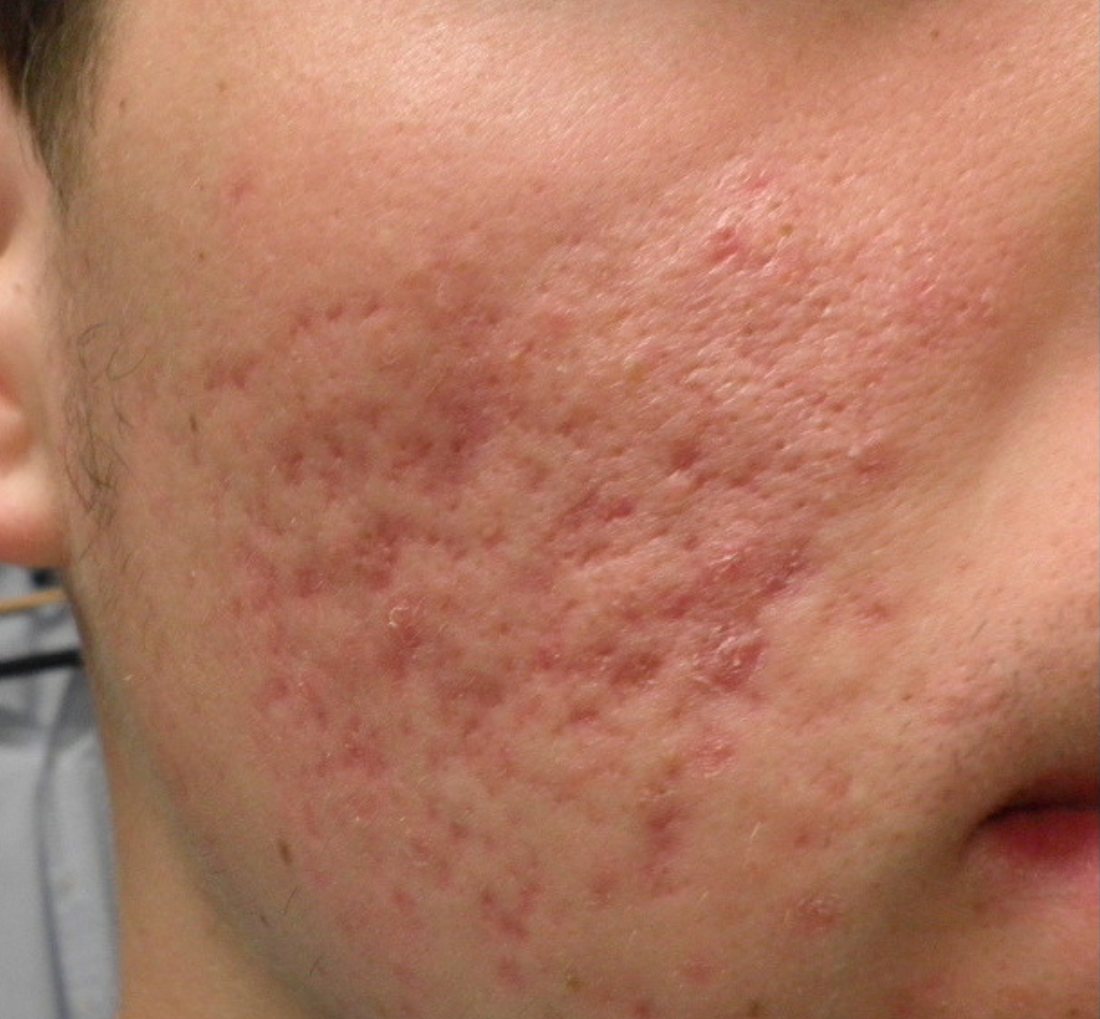
This is the single most useful thing to work out before a consultation. Find the one that looks most like yours. Two of these are not scars at all.
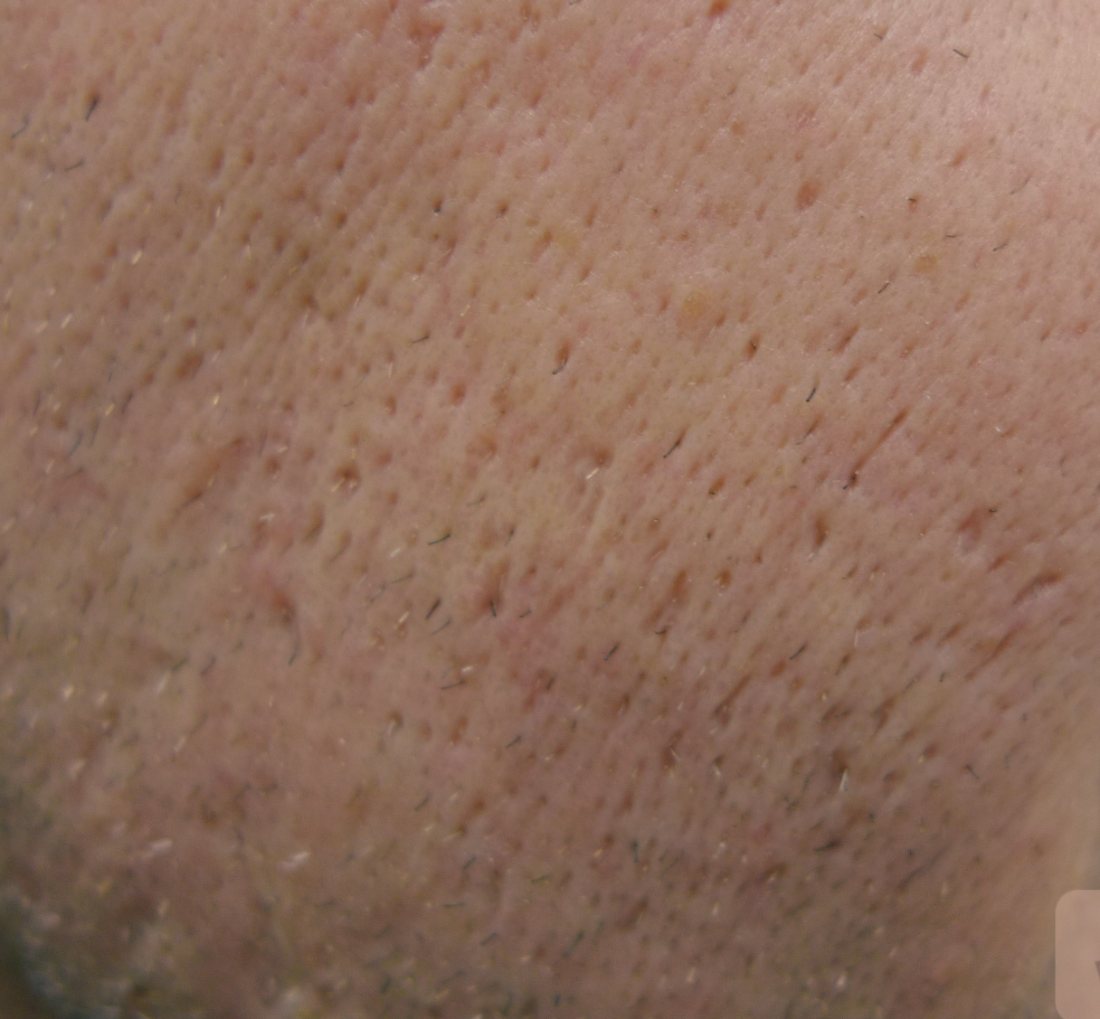
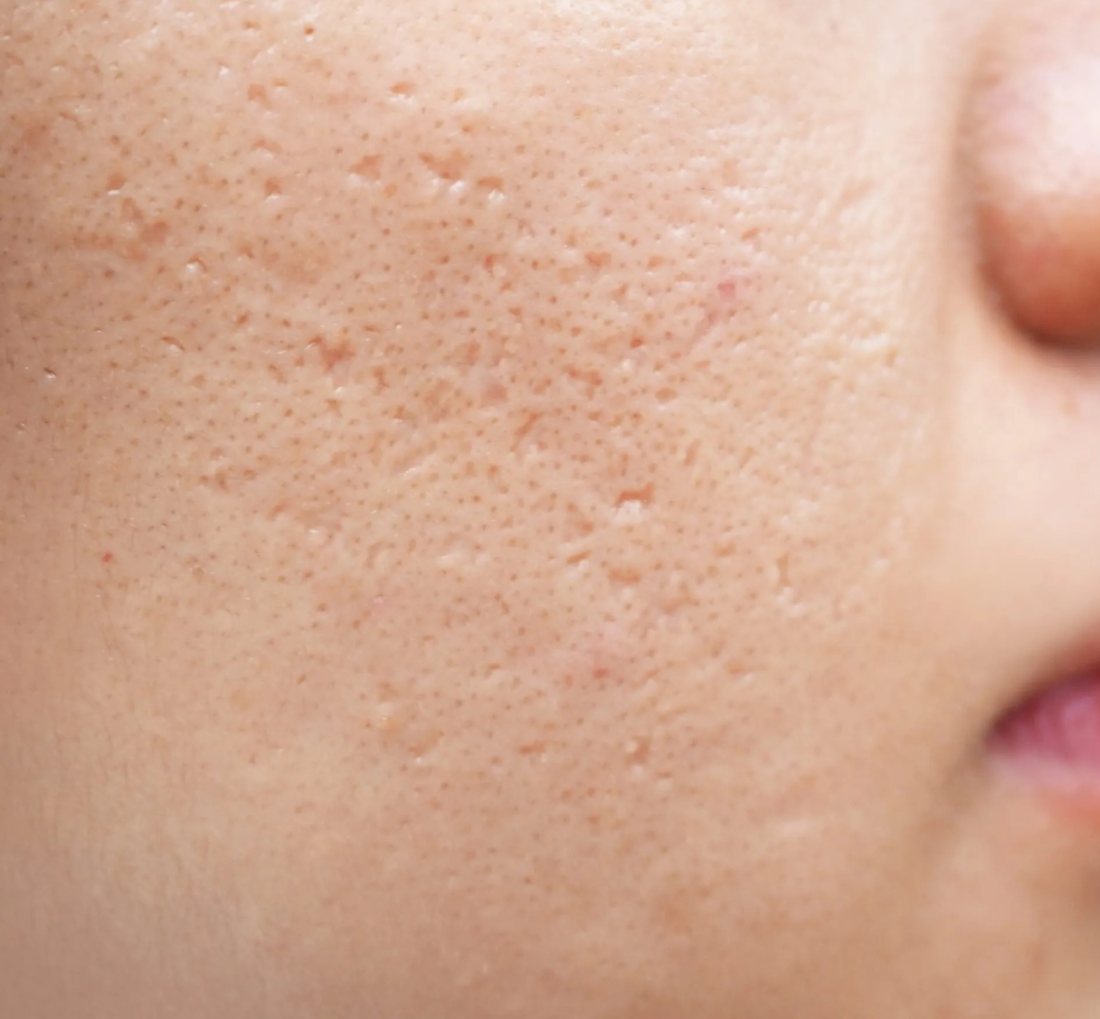
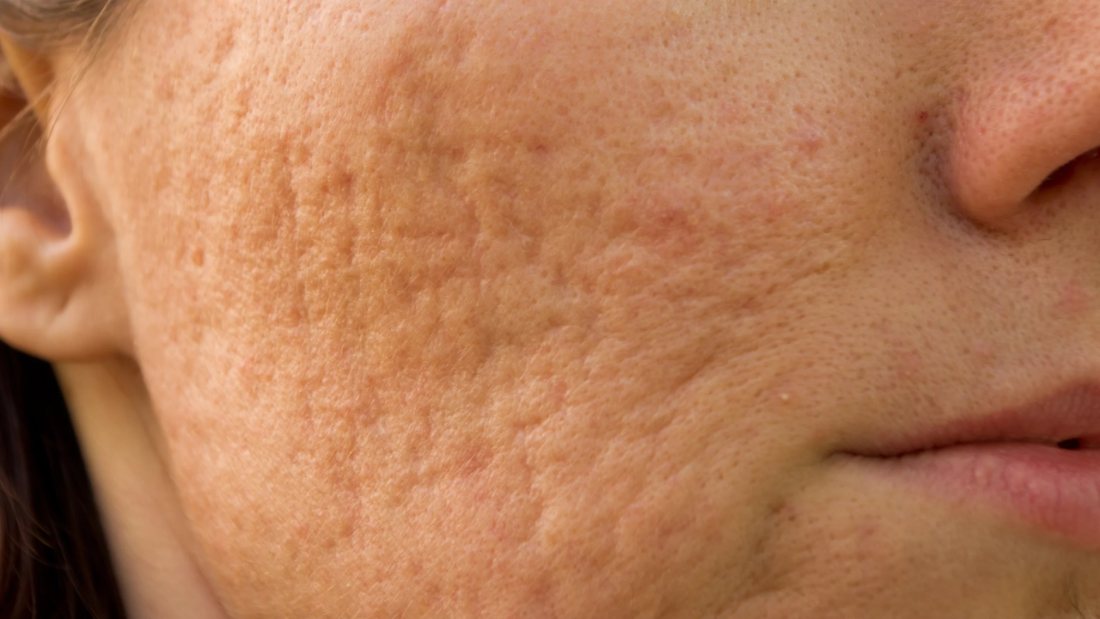
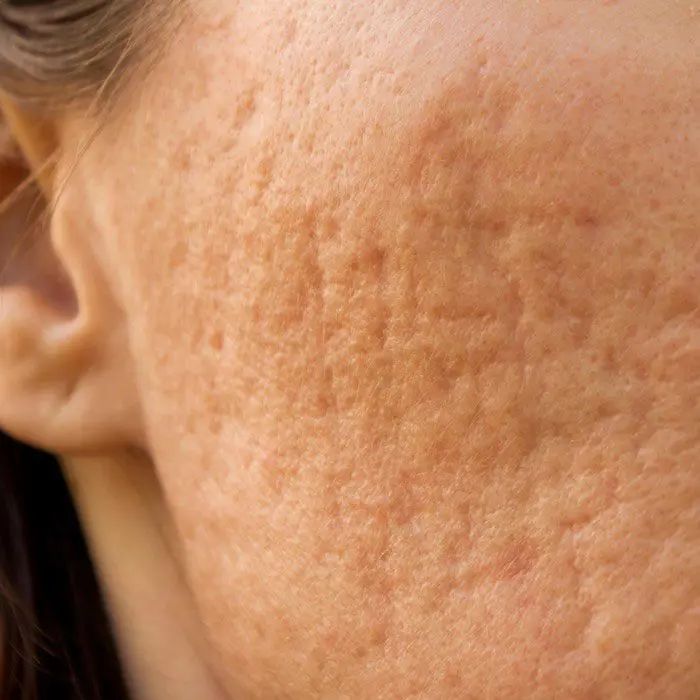
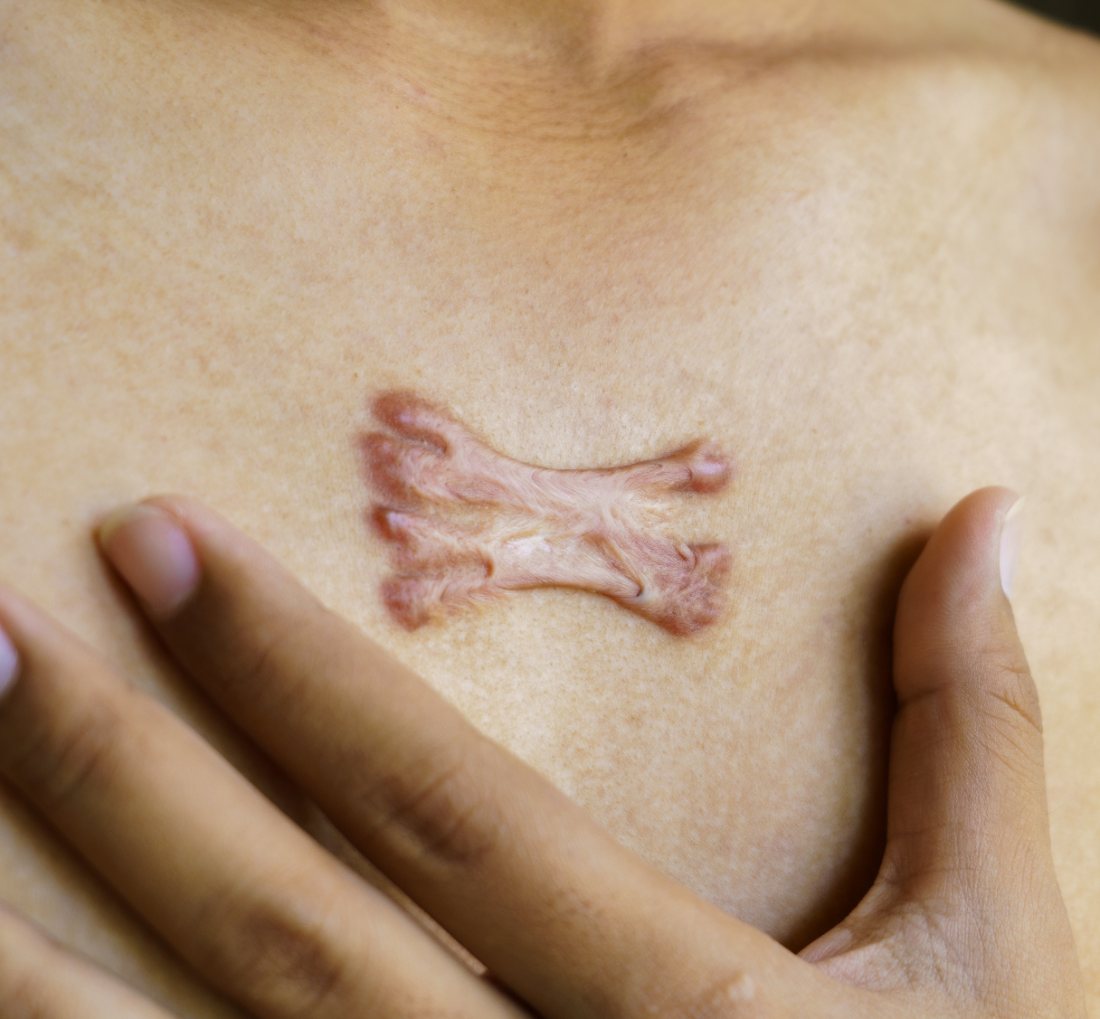
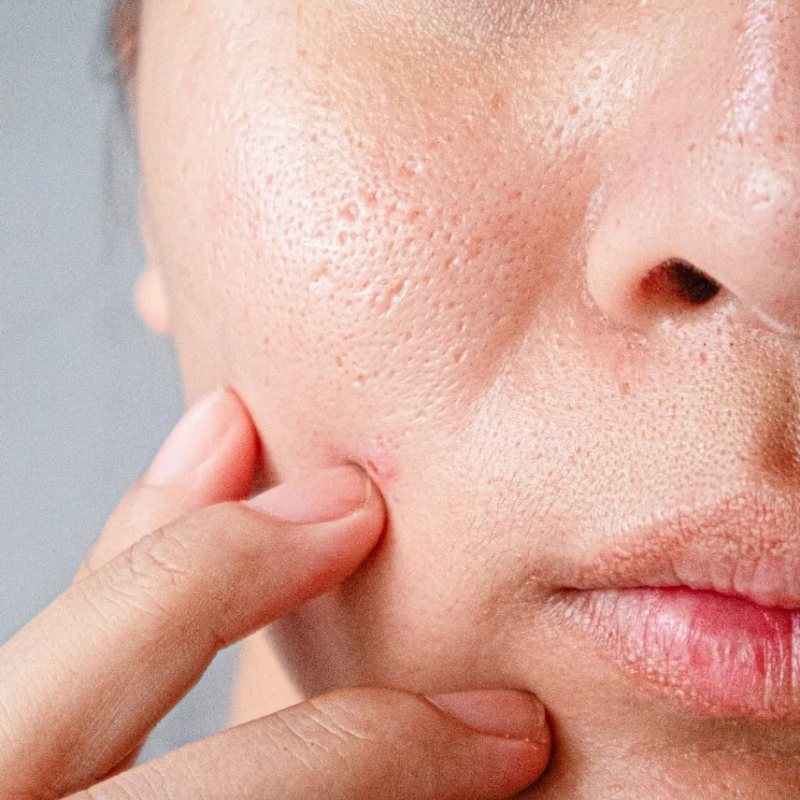
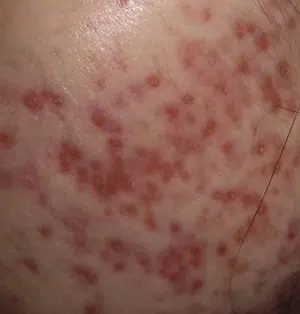
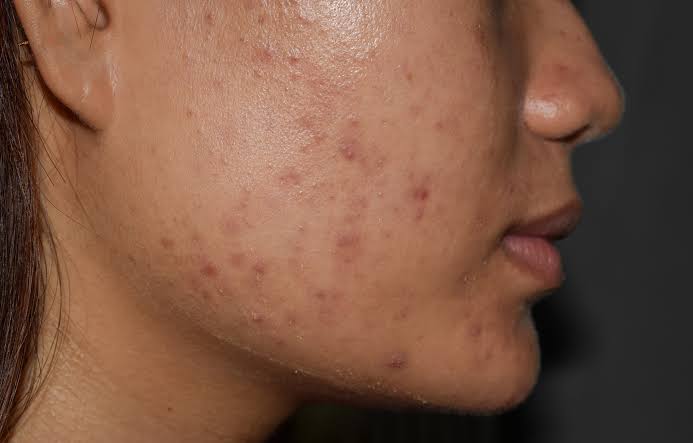
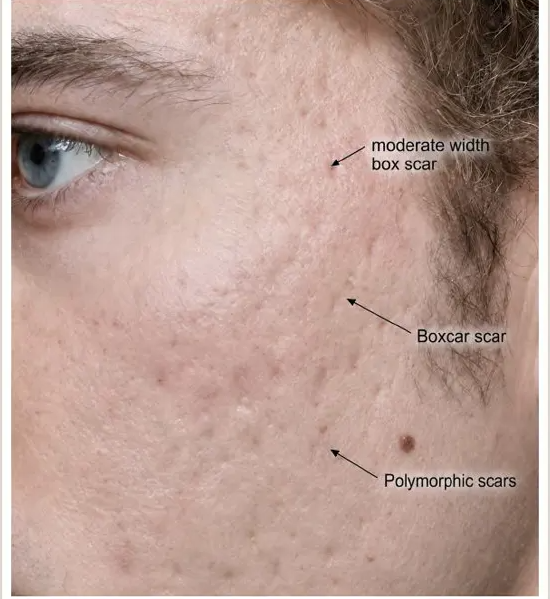
Acne scars are mapped, not guessed.
When I look at a face with acne scarring I do not see “acne scars”. I see a map of distinct types sitting side by side. Your virtual consultation includes a written report prepared from your photographs before we speak: every scar signature named, each matched to its procedure, staged in order, with realistic session counts, downtime and a firm cost.
See a sample report→How severe is it?
Acne scarring is graded on the Goodman–Baron scale. It is the scale used in the literature and the one I grade your photographs against, so the projection in your report is measured against something rather than guessed.
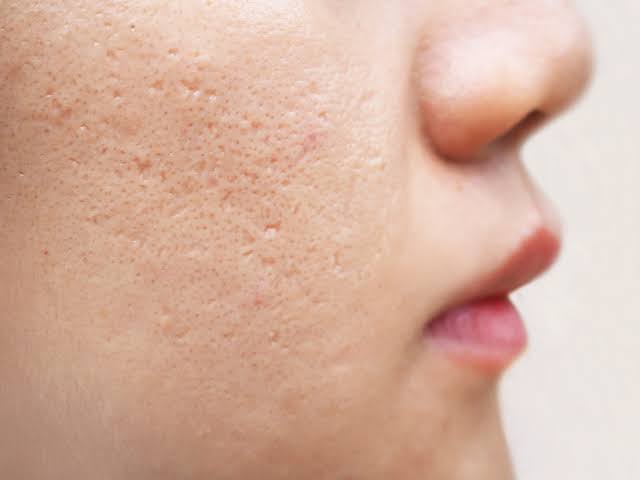
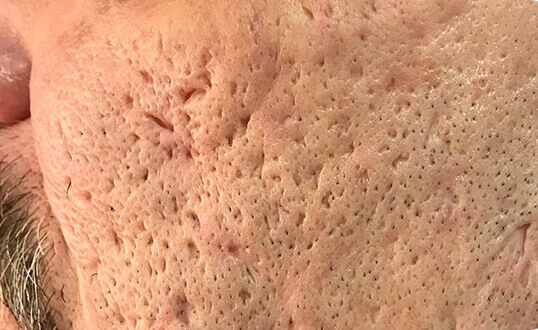
Most people who book sit at grade 2 or 3 with a handful of grade 4 scars mixed in — and it is usually those few deepest scars that set the ceiling on the whole result. They are treated first for exactly that reason.
Why you scarred and someone else didn’t
An acne scar is the outcome of a healing response, not of the spot itself. When inflammation extends deep enough to damage the dermis, the repair either falls short — leaving a depression — or overshoots, leaving a raised scar.
The single biggest predictor of scarring — and the one thing that could have been changed. Not by you, but by how quickly effective treatment was started.
Nodular and cystic acne scars; superficial comedonal acne generally does not.
Some people remodel collagen quickly and cleanly. Some do not. You had no say in which you are.
Picking and squeezing make individual lesions worse, but they are not why you have widespread scarring. Neither is your diet or your cleanser. This is not a hygiene failure and it is not a character flaw.
Why the type matters more than the treatment
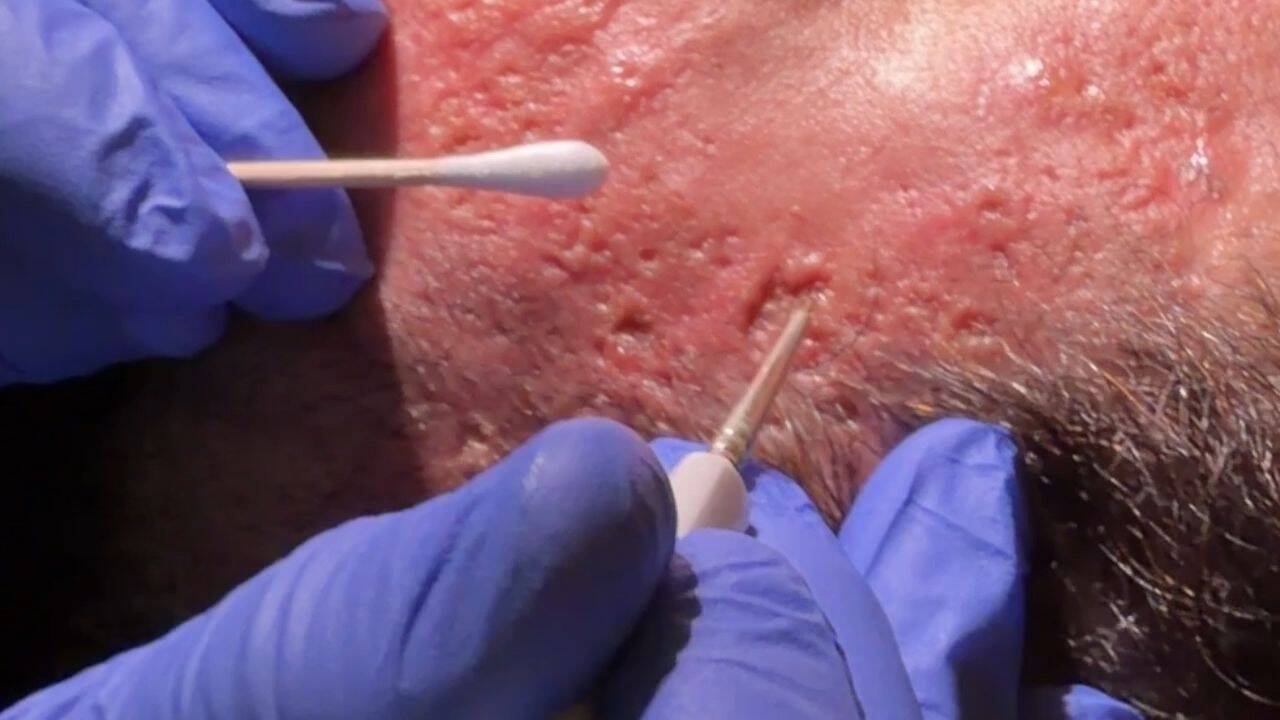
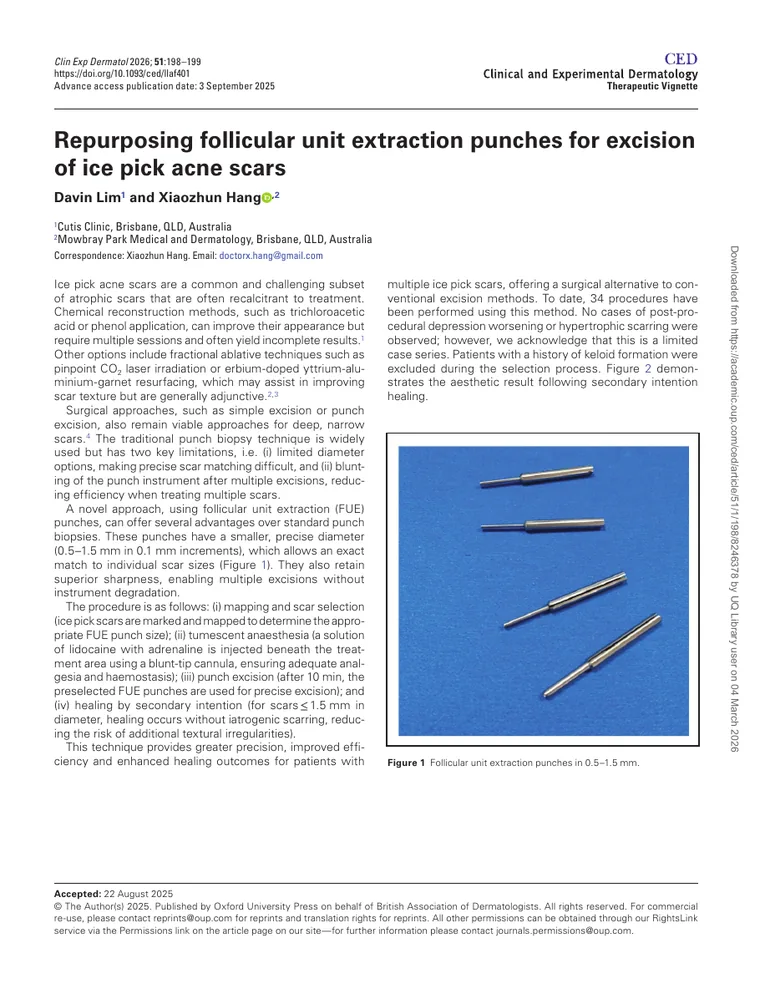
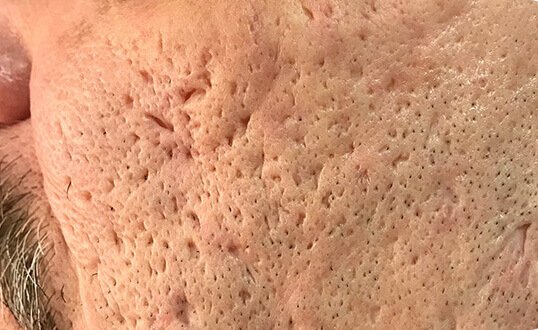
Ice pick scars are deep and narrow — a laser beam cannot reach the base of one. Rolling scars are tethered from underneath and need that tether released, which no resurfacing treatment does. Raised scars need the opposite of everything used for indented ones. This is why there is no single best treatment for acne scarring, and why anyone offering one answer to everybody is guessing.
A procedure that stops at 1.5 mm cannot alter a tract that bottoms out at 2.5 mm, whatever its other merits.
Indicative only — confirmed at your consultation. The last two rows are the honest ones, and the ones that surprise people.
Patients regularly arrive having spent thousands on many sessions of a single device. The modality was only ever capable of treating one of their four scar types. That is not a treatment failure. It is a matching failure — and it is avoidable.
Treatments for acne scars
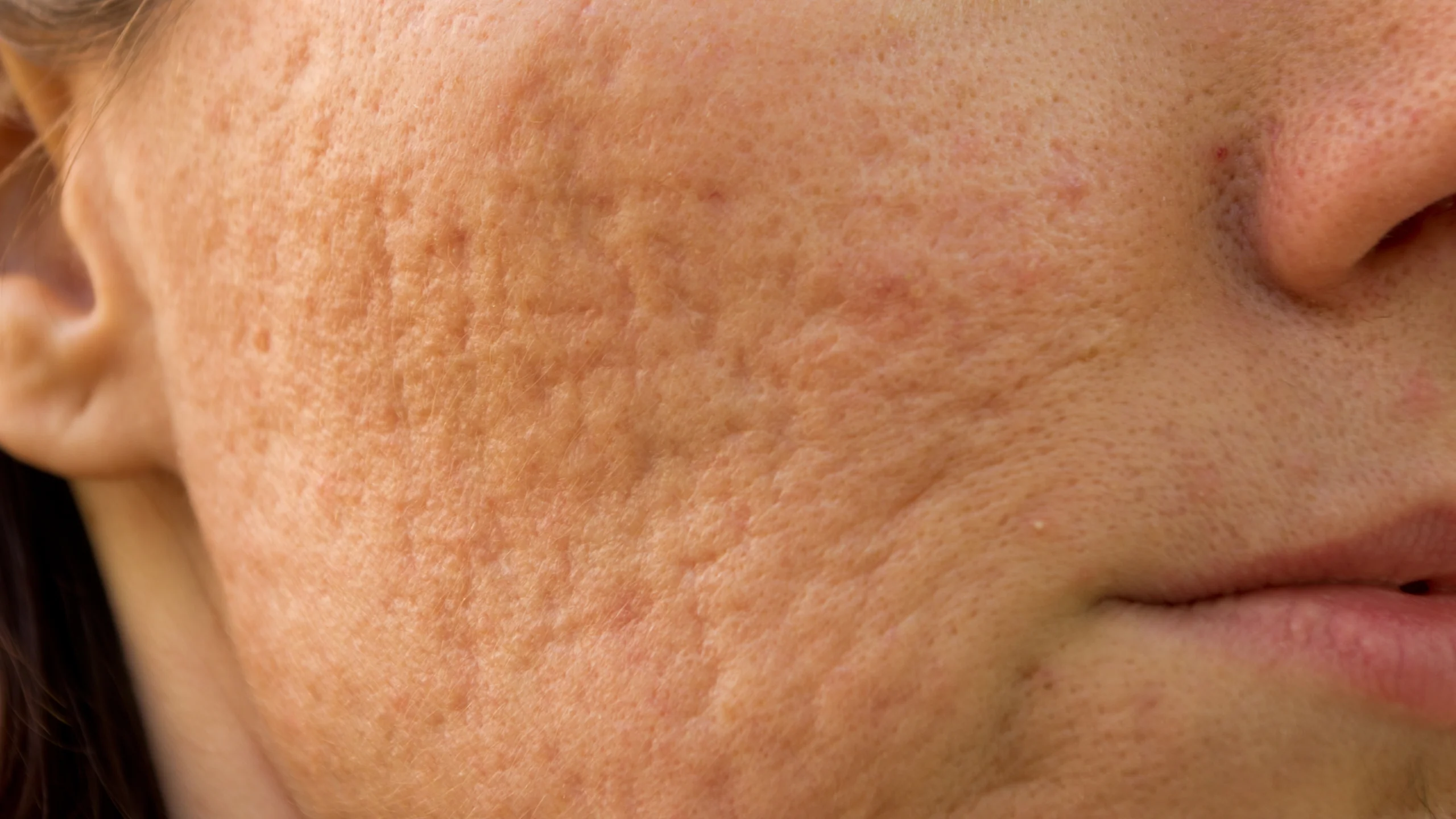
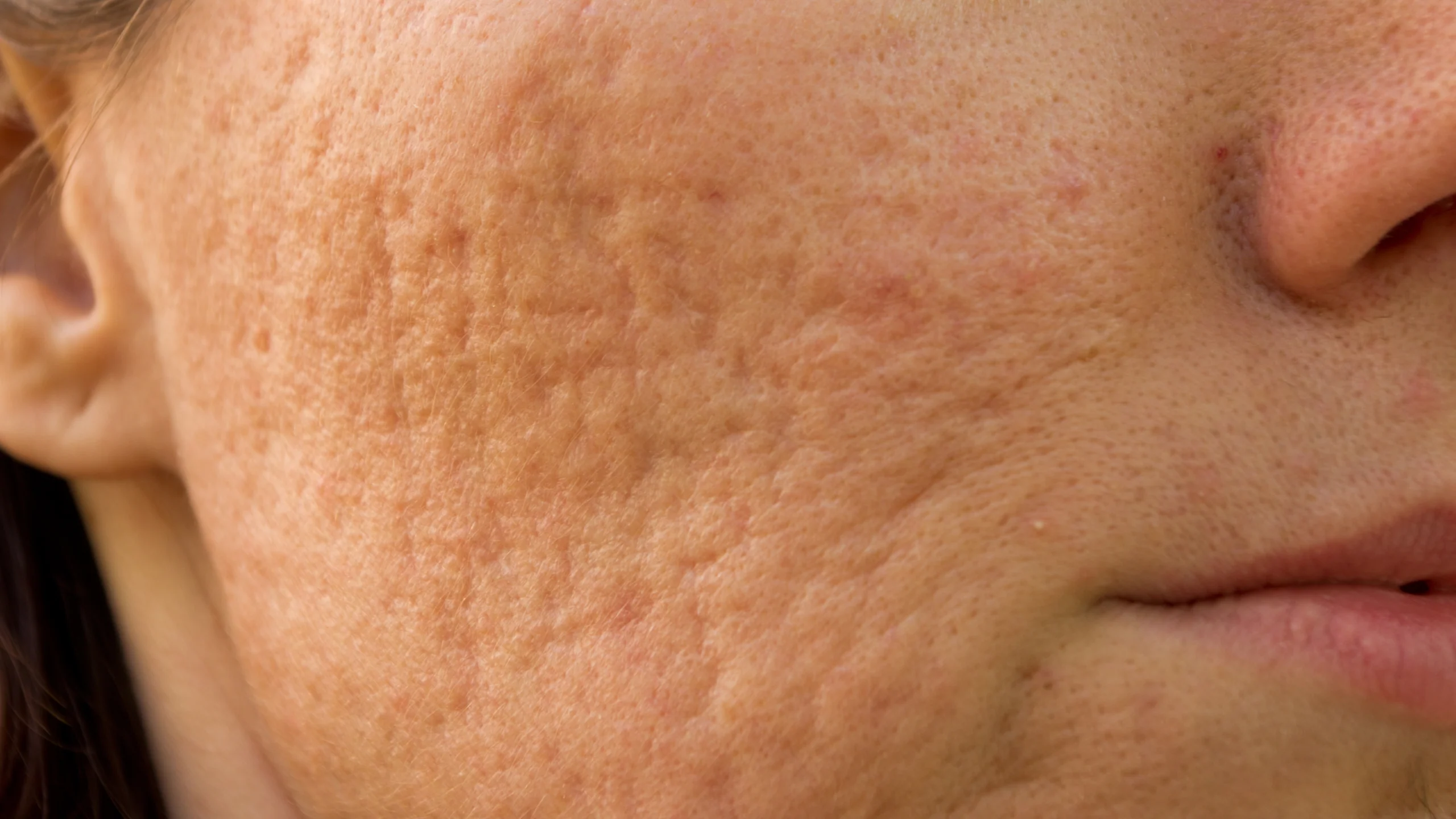
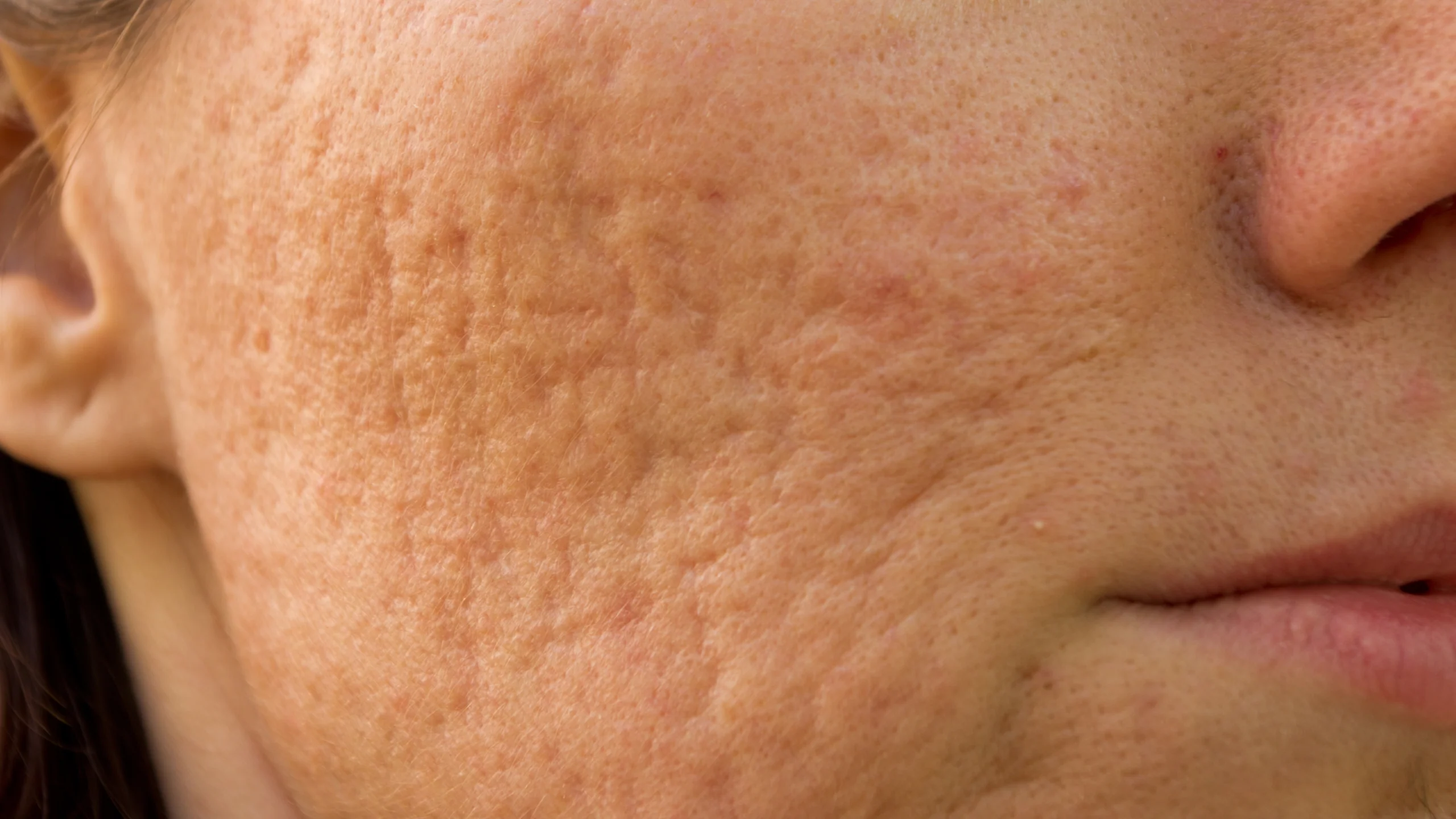
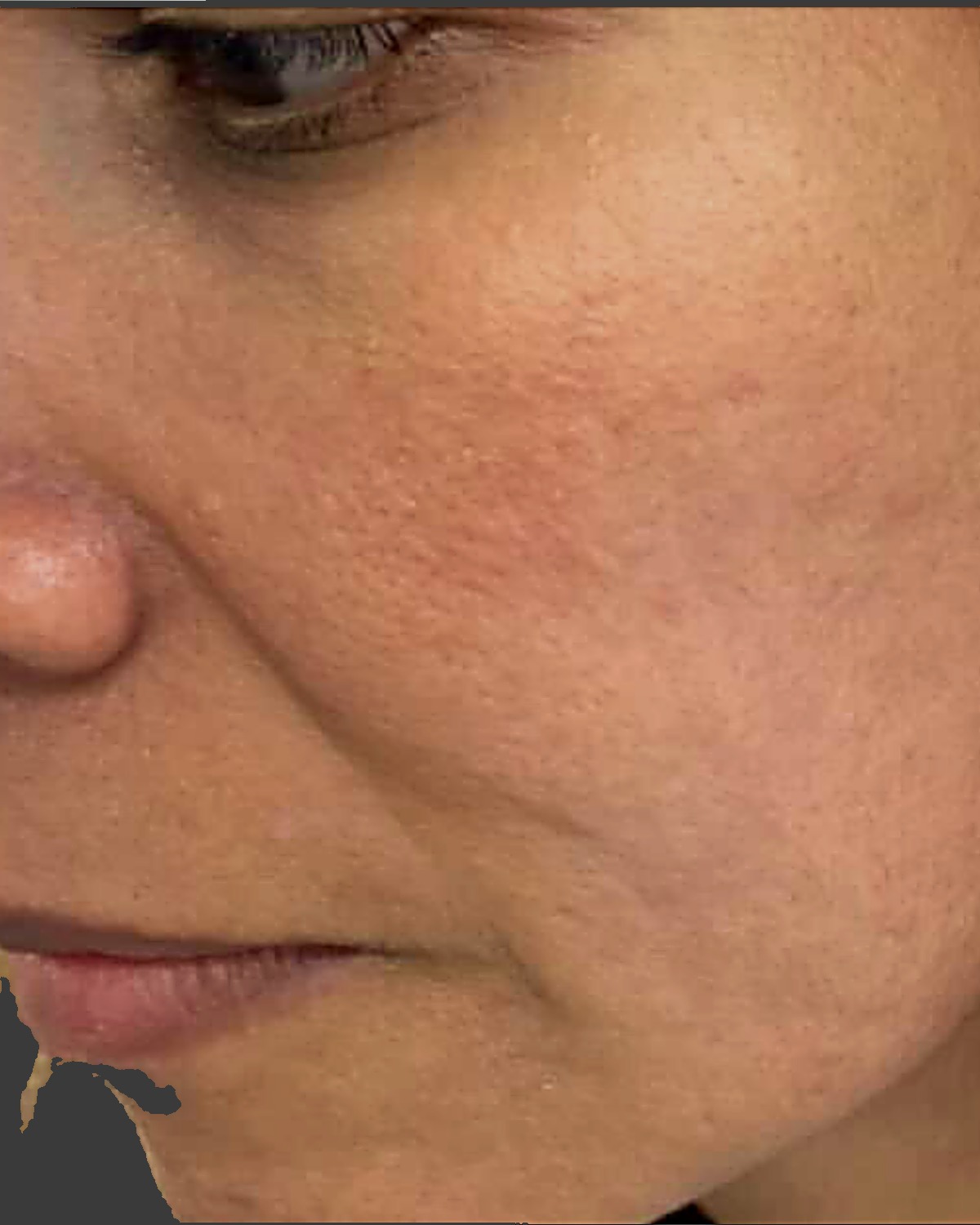
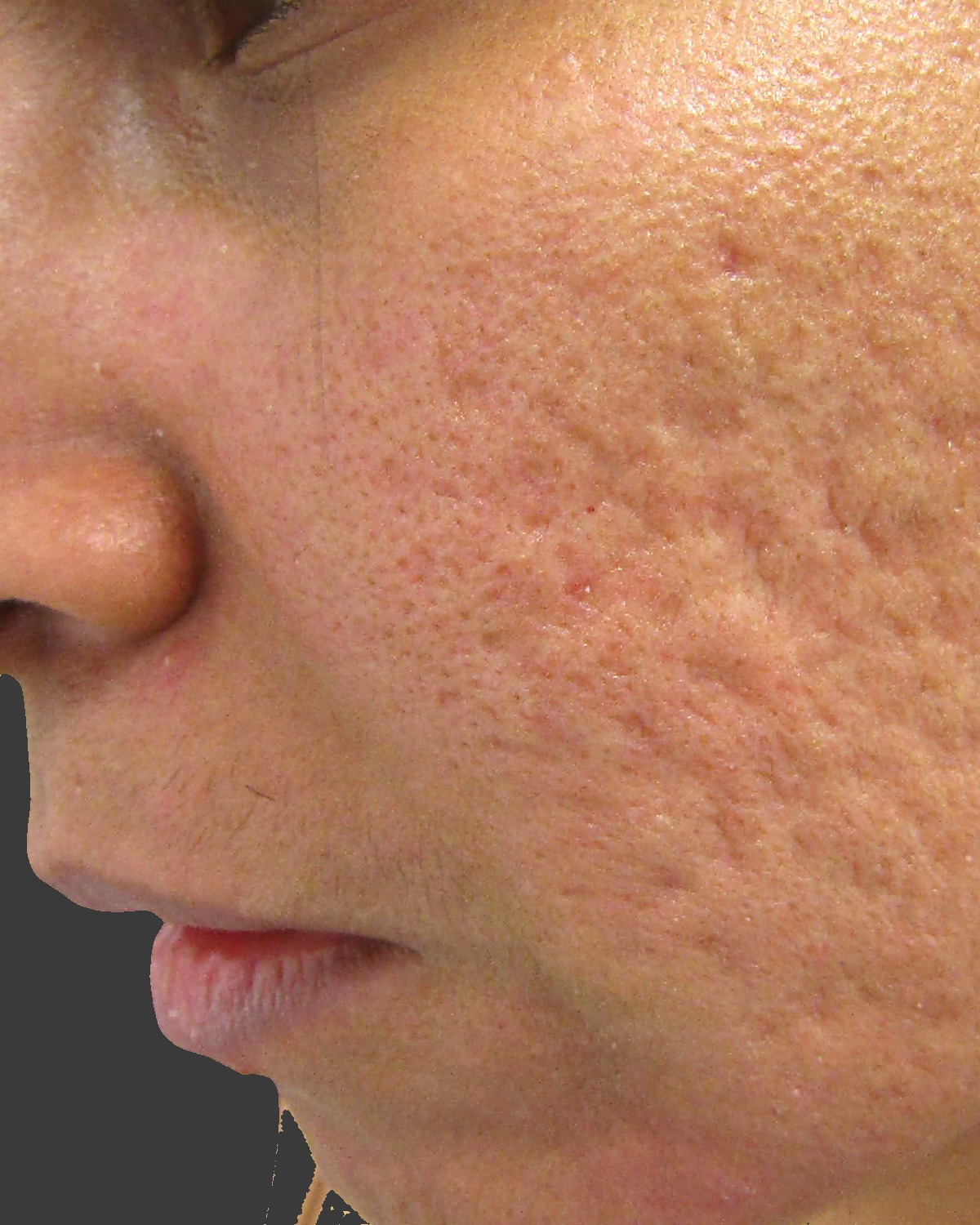
Deep rolling acne scars
Atrophic rolling acne scarring · Goodman–Baron grade 4
About these photographs. Identical lighting, camera position and distance, no makeup and no digital alteration — lighting angle alone can make identical skin look dramatically better or worse. Results are individual; yours may differ, and I deliberately include representative results rather than only the best ones.
See the before & after gallery →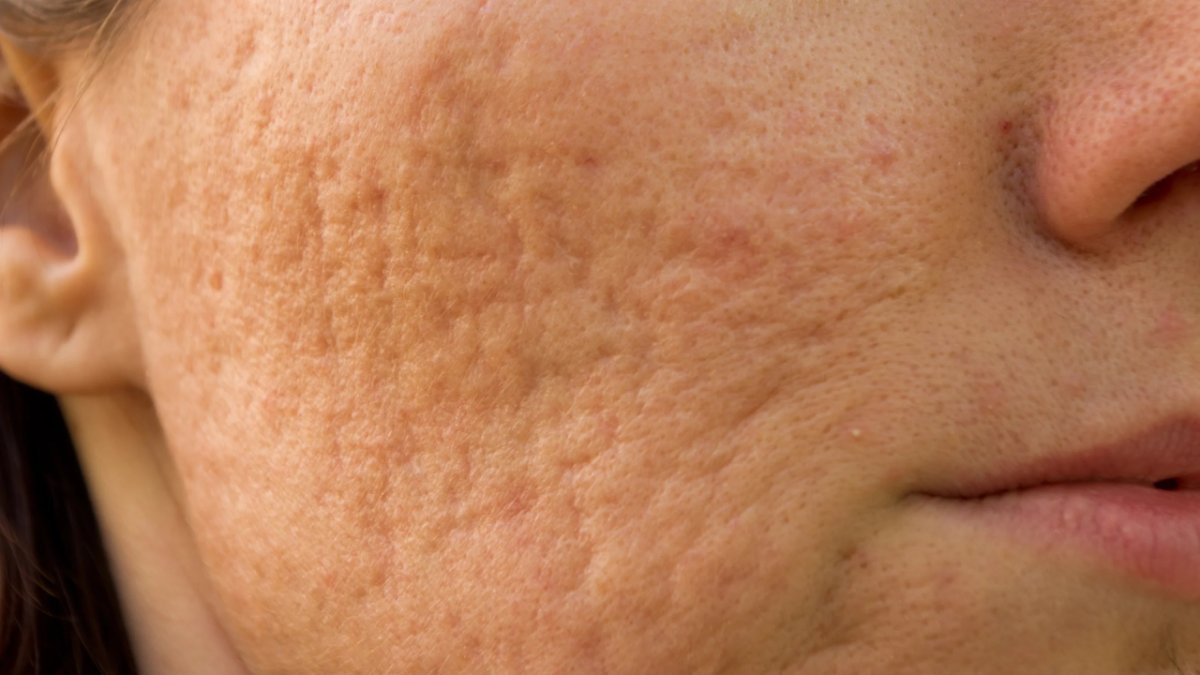
What a programme actually looks like
Most people arrive expecting an appointment. It is closer to a project — and it is better to know that now. The order matters as much as the choice.
- 1 IdeallyAcne in remission first
Active inflammation diverts healing away from collagen remodelling, and every new lesion risks a new scar.
- 2 Virtual consultationAssessment and scar mapping
Your photographs are graded, every scar signature is named, and each is matched to its procedure and placed in order. This is what the written report is.
- 3 Stage oneThe rate-limiting scars
The deepest ice picks and boxcars — the ones setting the ceiling. Typically TCA CROSS and focal techniques.
- 4 Stage twoTexture and tethering
Broader resurfacing and subcision, often under sedation because it is uncomfortable work done properly rather than lightly.
- 5 Stage threeAdjuncts, last
Volume support and collagen stimulation come once the structural work is done. Used first, they are wasted.
- 6 6–12 monthsRemodelling and maintenance
Collagen keeps reorganising well after your last session — the result at three months is not the result. Sun protection and, sometimes, topicals keep it.
From my Instagram
Short, practical explanations of acne scars and how they are treated.
Realistic results
A well-matched, properly staged programme typically moves people one to two Goodman–Baron grades — which in practice means scarring that reads as texture in certain light rather than as scarring across a room.
Your own rate of collagen remodelling sits on a bell curve. Fast remodellers need fewer sessions; slow remodellers need more. That is why your report gives a projected range rather than a single number.
- Skin does not return to unscarred. The goal is shallow, soft-edged and unremarkable — not invisible.
- Jawline and temple scars respond more slowly than cheek scars.
- Very deep tethered scarring may improve substantially and still be visible in raking light.
- New acne means new scars. Revision does not protect you from that.
What it costs
Cost depends on which techniques your scars need, how many sessions, and whether treatments are combined. I publish indicative ranges rather than making you ring to find out. Your written report gives a firm figure for your case, staged session by session, before you commit to anything.
Medicare rebates may apply where I am involved in the treatment, and generally do not apply to fractional laser, TCA CROSS or soft-tissue injectables. Overseas patients are not eligible for Medicare.
Downtime and side effects
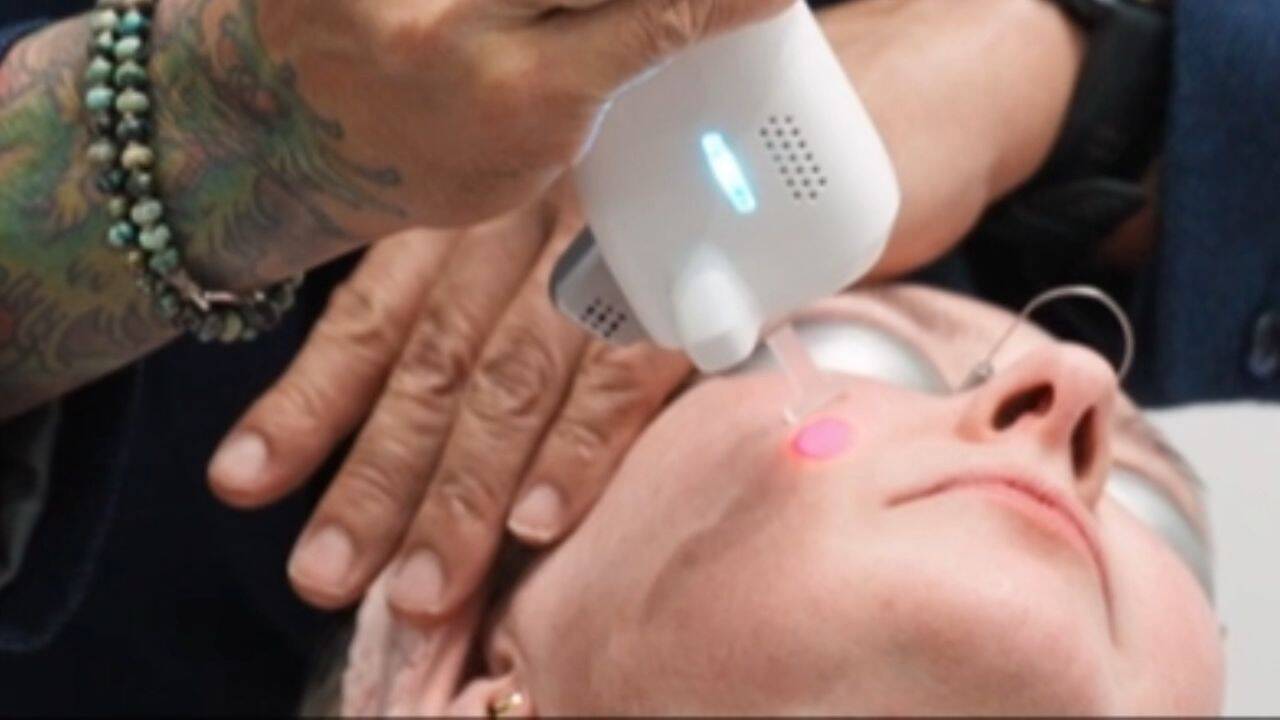
Ranges from none to about a week depending on the technique. The most useful thing I can tell you: with resurfacing, days three to five are when you look worse than when you started, and that is expected.
Sun exposure after any resurfacing is the main avoidable cause of a poor outcome. Ten days of genuine avoidance after each session, and diligent protection for months afterwards, is part of the treatment — not advice tacked onto the end of it.
Acne scars in darker skin types
Acne scarring is treatable in every skin type, but the approach is genuinely different. Post-inflammatory hyperpigmentation after resurfacing is the main risk, and it is managed with test spots, adjusted settings, pigment preparation beforehand and strict sun avoidance afterwards — not by avoiding treatment.
Focal techniques such as TCA CROSS suit darker skin particularly well, because they treat the scar rather than the whole surface.
What I would be cautious about
Six sessions of one device, sold before anyone has named your scar types, will treat one of your four problems. This is the most common way people waste money on scarring.
It has a place, but it will never reach the base of an ice pick scar or release a tethered one. Sold as a complete answer to moderate scarring, it is not.
Volume placed under a scar still anchored from below lifts briefly and pulls back down. Release first, volume later — or you pay twice.
It is the request I most often decline, because new scars form behind the treatment.
The pigment risk is manageable with the right plan and considerable without one.
My published work on acne scars
Acne scars: everything people ask
Will my acne scars ever go away completely?+
No. Substantial improvement is realistic; complete erasure is not. Most people are very satisfied with 50–70% improvement, because that is the difference between scarring you notice in every mirror and scarring you stop thinking about.
How do I tell scars from marks?+
Run a fingertip over the area, or look at it in side lighting. If you can feel a dip or a raised area, it is a scar. If the skin is smooth and only the colour differs, it is discolouration — which is much easier to treat and often fades on its own.
What are the different types of acne scars?+
Ice pick (narrow and deep), boxcar (sharp-edged craters), rolling (broad, wavy undulations), tethered (pulled down by bands under the skin) and raised — hypertrophic or keloid. Enlarged, scarred pores are common too. Red marks (post-inflammatory erythema) and brown marks (post-inflammatory hyperpigmentation) are colour changes, not textural scars.
Are my scars too old to treat?+
No. Scar age matters far less than most people assume. Scars that are decades old respond much as recent ones do — depth and type are what determine the result.
Why do acne scars look worse with age?+
As the face loses volume and collagen with age, rolling and tethered scars deepen and cast more shadow. This is one reason treatment later in life often combines scar release with volume support.
Why do some people scar and others don’t?+
Three things matter most: how long the acne was active before it was controlled, how deep the inflammation went, and genetics. Picking makes individual lesions worse but is not why you have widespread scarring, and neither is diet or your cleanser.
Can acne scars on the back and chest be treated?+
Yes. The chest and back scar differently to the face — raised and keloid scars are more common there — so the plan often leans on injections and vascular laser rather than resurfacing.
How can I prevent acne scars?+
Control the acne early and effectively. How long acne stays active before it is controlled is the single biggest predictor of scarring. If you are still breaking out, see your GP or dermatologist now rather than waiting.
What is the best treatment for acne scars?+
There is no single best treatment — there is a best treatment for each scar type. Ice pick scars need TCA CROSS or punch techniques, rolling and tethered scars need subcision, boxcar scars respond to fractional laser, and raised scars need injections. Most people need two or three of these in a planned order.
How many sessions will I need?+
A typical course is 3–5 procedures, 4–8 weeks apart, often combining two or three techniques in a single session. Your report gives a projected range for your grade and scar mix.
Should I wait until my acne is under control?+
Yes. New breakouts create new scars, and inflamed skin responds unpredictably to resurfacing. If your acne is still active it is addressed first — it is not a delaying tactic, it is the reason the treatment works.
Can you treat me if I still get the occasional spot?+
Occasional, yes. Active inflammatory acne, no — control comes first.
What is TCA CROSS?+
CROSS stands for chemical reconstruction of skin scars. A high-strength trichloroacetic acid is placed precisely into each scar, triggering collagen to rebuild it from the base. It is the best-matched treatment for ice pick scars and enlarged pores, and my published work extends it to boxcar and polymorphic scars.
What is subcision?+
A fine cannula or needle is passed under the skin to cut the fibrous bands that tether rolling scars down. Nothing applied from the surface can release a tether, which is why subcision is central to treating rolling scars.
Is fractional CO₂ laser good for acne scars?+
For boxcar scars, rolling scars and overall texture, yes. It cannot reach the base of a deep ice pick scar or release a tethered scar, which is why it works best as one part of a combined plan rather than on its own.
Does microneedling work for acne scars?+
It helps mild texture, but it will never reach the base of an ice pick scar or release a tethered one. Sold as a complete answer to moderate scarring, it is not.
Do dermal fillers help acne scars?+
Fillers can lift broad rolling scars and restore lost volume — but only once tethered scars have been released. Filler under a tethered scar lifts briefly and pulls back down.
Will you treat the red and brown marks at the same time?+
Often yes. They are a separate workstream from the texture and frequently improve faster than the scars themselves, which is encouraging early on.
Can I have treatment while taking isotretinoin?+
In my published TCA study, patients on isotretinoin at the same time showed no appreciable increase in healing time or complications. Whether that applies to your treatment plan depends on the procedure, and is decided at your consultation.
I’ve had six sessions of something already and seen very little. Is it me?+
Almost certainly not. Bring the details to your consultation — in most cases the procedure was capable of treating only one of your scar types.
Does it hurt?+
TCA CROSS and vascular laser are brief and tolerable with topical anaesthetic. Fractional ablative resurfacing and subcision are done under local anaesthetic, and often with sedation, because doing them properly is not comfortable.
How much downtime should I plan for?+
From none to about a week depending on the technique. TCA CROSS leaves small crusts for five to seven days; fractional ablative laser means three to five days of weeping, then two to four weeks of pinkness; subcision can bruise for one to two weeks.
When will I see results?+
Some change is visible within weeks, but collagen keeps remodelling for 6–12 months after your final session. The result at three months is not the final result.
Are the results permanent?+
The collagen rebuilt inside a treated scar is permanent. Your skin will continue to age, and new acne can cause new scars, but the improvement itself does not wear off.
Is acne scar treatment safe for darker skin?+
Yes, with the right plan. The main risk is post-inflammatory hyperpigmentation, managed with test spots, adjusted settings, pigment preparation beforehand and strict sun avoidance afterwards. Focal treatments such as TCA CROSS suit darker skin particularly well.
What is the best time of year to treat acne scars?+
Autumn and winter make the essential sun avoidance after resurfacing much easier, particularly in Queensland. Focal treatments can be done year-round with good sun protection.
How should I prepare?+
Get active acne under control, avoid sun and tanning beforehand, and — in darker skin types — follow the pigment-preparation plan in your report for several weeks before resurfacing.
How much does acne scar treatment cost?+
Indicative ranges are published on this page — for example $990–$2,990 per session for CO₂ or hybrid fractional laser resurfacing, and $890–$1,990 per session for TCA CROSS. Your written report gives a firm, staged cost for your case before you commit to anything.
Is acne scar treatment covered by Medicare?+
Partly. When a specialist dermatologist is involved in scar treatment, Medicare provides a substantial rebate — procedures such as subcision, nerve blocks and fully ablative laser resurfacing are partially covered. Vascular laser attracts a rebate where I am involved in the treatment and you have a valid referral. Rebates generally do not apply to fractional laser, TCA CROSS or soft-tissue injectables. Overseas patients are not eligible for Medicare.
Do I need a referral?+
Not to be seen, though a GP referral is useful and may attract a Medicare rebate on the consultation itself.
Can this be done entirely virtually?+
The assessment, the grading, the plan and the costings, yes. The procedures are performed in Brisbane or Sydney.
What photographs do I need for a virtual consultation?+
Three clear photographs of the scarred area: front-on, a side or angled view, and a close-up. Use natural lighting, ideally from the side, and no makeup.
I live interstate or overseas. Can I still be treated?+
Yes. Many patients complete the virtual consultation first, then plan travel around a staged programme so that sessions line up with their time in Brisbane or Sydney.
No questions match. Ask it in your consultation — book here.
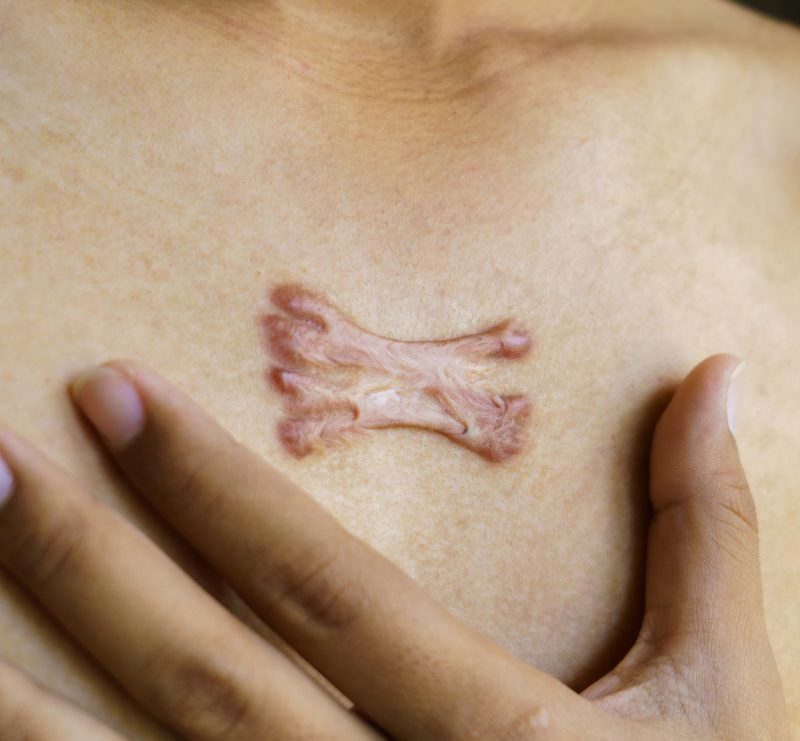
Not sure which scars you have?
You do not need to work it out before booking — that is what the assessment is for. Your virtual consultation includes a written treatment plan prepared from your photographs and sent to you before we speak.
Have some questions?
Send a message and it will be answered personally. Form endpoint — to be wired in production
See the work before you book
Procedures, technique, before and afters, and the reasoning behind them — posted across three accounts, each with its own focus.