Home›Treatments›TCA CROSS
Treatment
TCA CROSS
Chemical reconstruction of skin scars. High-strength acid is placed into the base of each scar, one at a time, and the scar rebuilds from the bottom up. It is how I treat the deepest scars first.
What it is
CROSS stands for chemical reconstruction of skin scars. Trichloroacetic acid (TCA) at 90% is placed precisely into the floor of a scar. The scar frosts white, a small crust forms, and over the following weeks new collagen fills the scar from its base.
Because only the scar is treated, the skin around it is left alone. That keeps recovery short, costs down, and the risk of pigment change low, even in darker skin.
What brings you here?
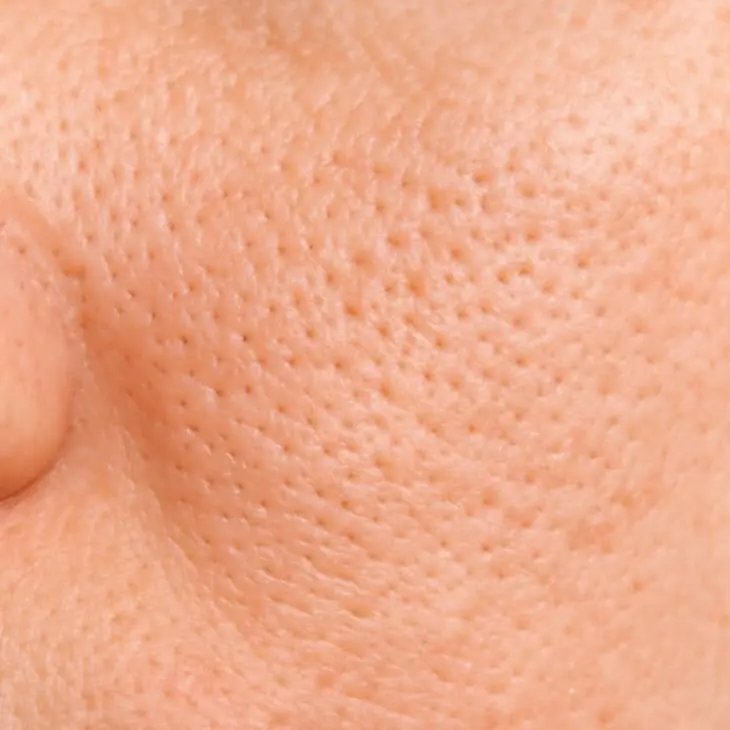
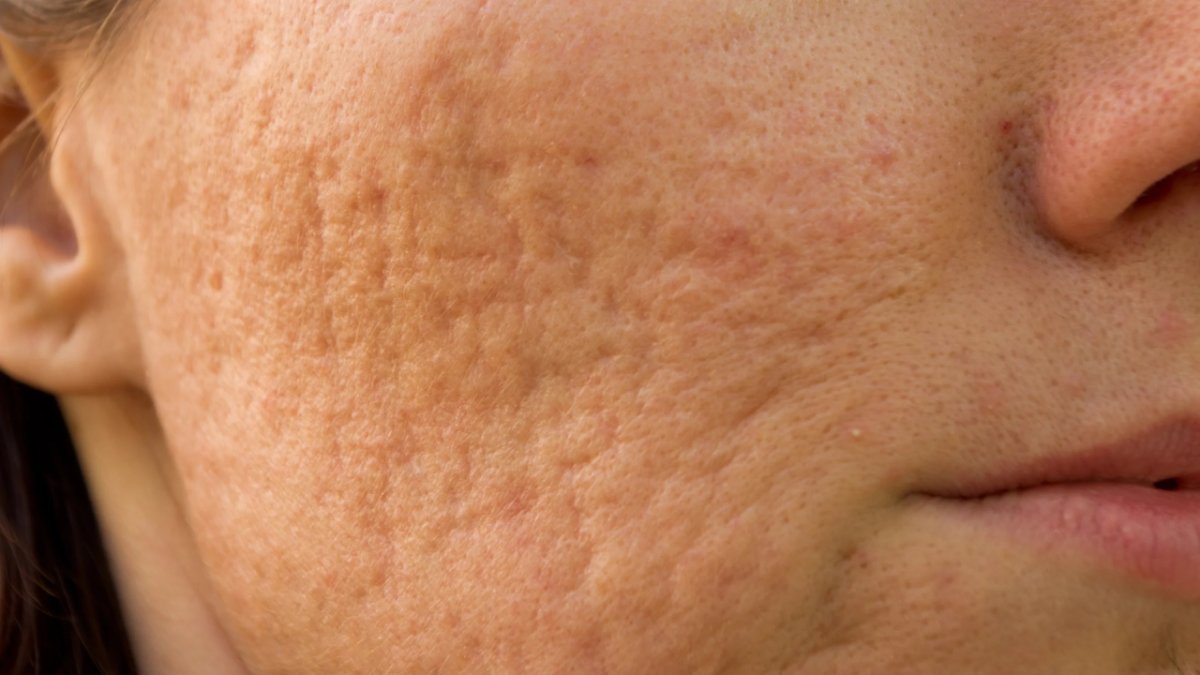
Acne scars
Most faces carry several scar types at once. TCA CROSS is used on the deepest of them first: the ice picks, narrow boxcars and polymorphic scars that set the limit on how good the final result can be.
I paint the acid on with a fine brush rather than dotting it, a technique my team and I published. It lets us treat broader and irregular scars, not just the narrowest pits. Once these have lifted, CO₂ or erbium resurfacing evens out what remains.
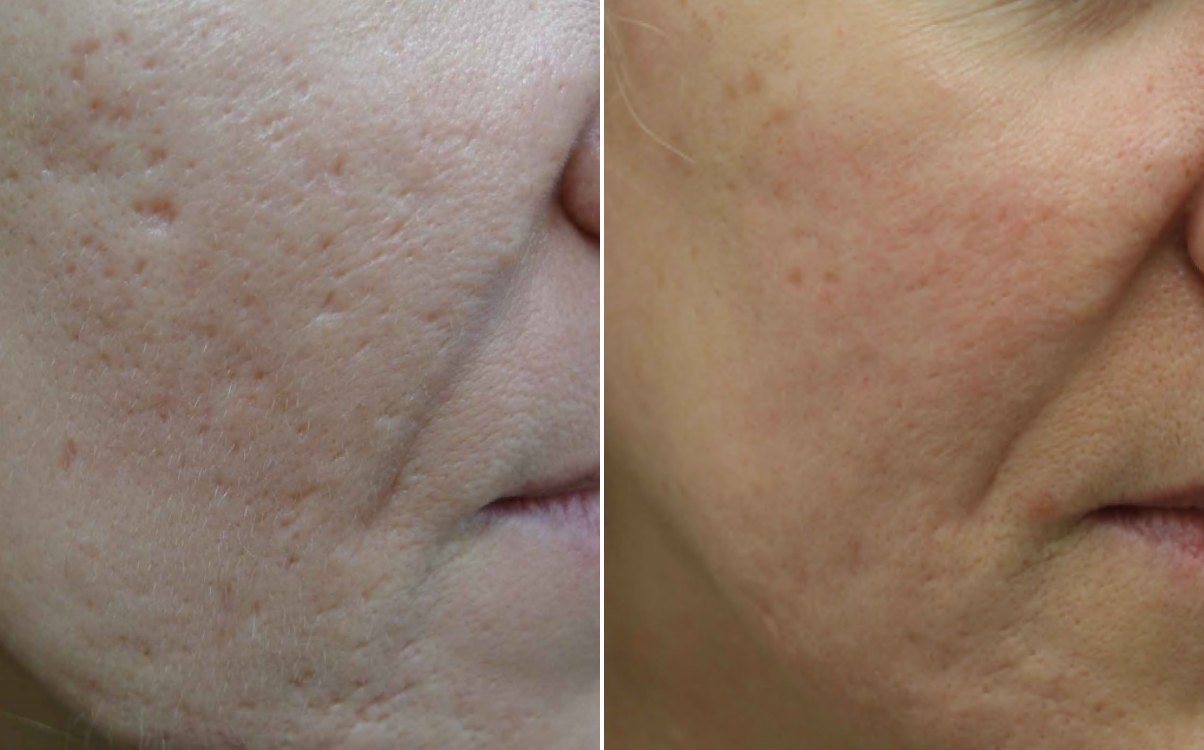 BeforeAfter
What it will not do: treat rolling or tethered scars. Those are released with subcision, and lost volume is replaced with soft tissue injectables.
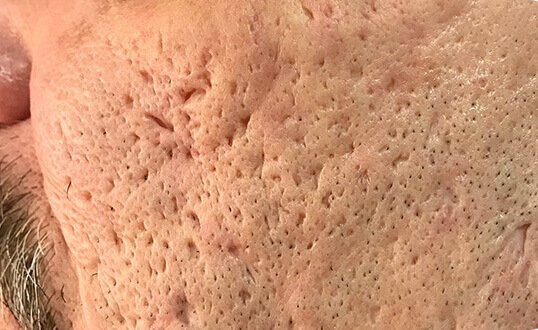
Ice pick scars
Ice pick scars are narrow tracts running deep into the dermis. Lasers resurface a flat plane and rarely reach their base. TCA is placed directly into the tract, tightening and rebuilding it from the bottom up.
Each session narrows and lifts the scar a little further. The scar closes in stages rather than all at once.
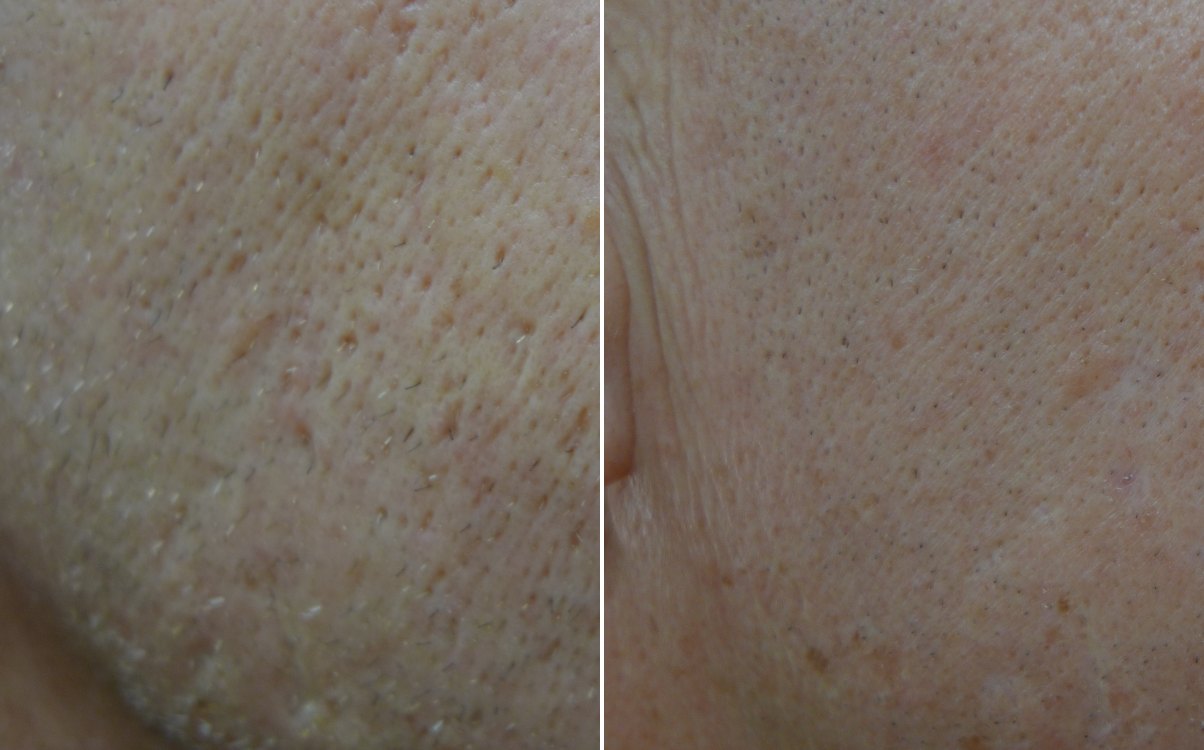 BeforeAfter
What it will not do: treat the flat skin between scars. Overall texture is the job of resurfacing, later in the plan.
Boxcar scars
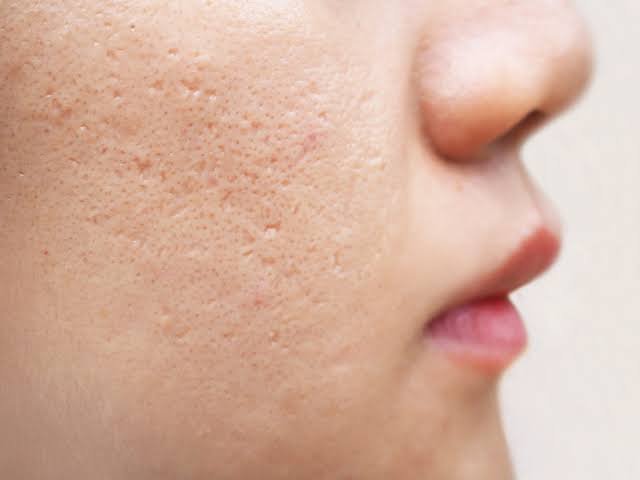
Boxcar scars are round or oval with sharp, defined edges. Painting TCA across the floor and up to the wall softens that edge and lifts the base, so the scar stops catching light.
Smaller and deeper boxcars respond best. Wide, shallow ones are usually better suited to resurfacing.
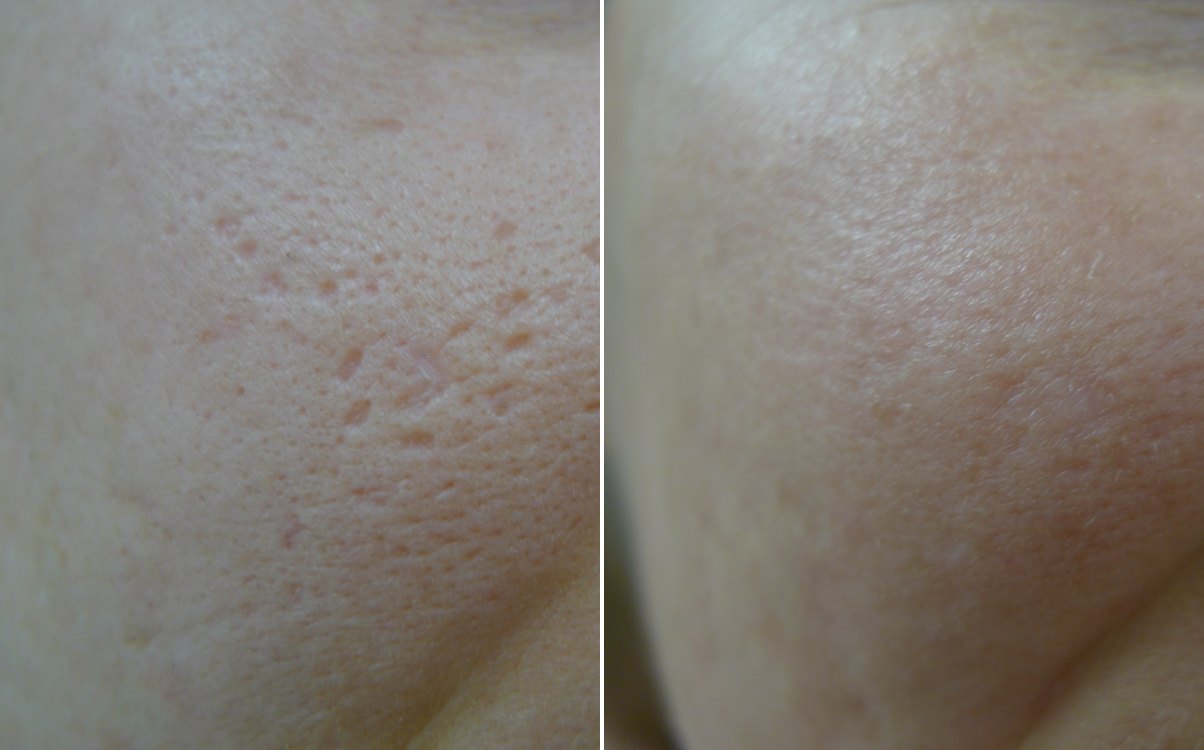 BeforeAfter
What it will not do: flatten wide, shallow boxcars on its own. Those need fractional or full resurfacing.
Enlarged pores
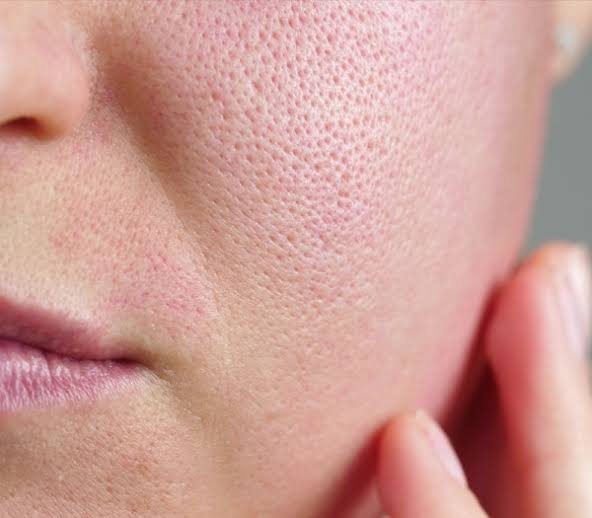
I treat individual enlarged pores that you can point to, the ones that look like small pits. A tiny amount of TCA placed into each one tightens it.
Overall pore size is driven by oil production and skin thickness, so that needs topical and laser treatment rather than TCA.
What it will not do: shrink every pore on the face, or reduce oiliness.
The rate-limiting scar
Why I treat the deepest scar firstMany practitioners go for the easy wins, the scars that respond quickly. I go for the hardest.
The hardest scar is your rate-limiting scar: the deepest one, and the one still visible after every other treatment is done. It sets the ceiling on your result, so I tackle it first.
TCA paint is how my team and I go after those deeper scars early. Over time, the deepest scars rise towards the surface, ready for procedures such as CO₂ or erbium resurfacing to finish the job.
Quick early improvement, then a plateau. The deepest scars are still there at the end.
Slower at the start, but every later treatment works on scars that are already shallower.
Everyone has a unique scar signature
Scar signatures are much like fingerprints. Everyone has their own. In some people boxcar scars predominate, in others rolling scars, and in others ice pick scars. Most carry a mix.
Understanding scar types: why one procedure is not the answer
Each scar type has a different shape under the skin, and each shape needs a different tool.
An ice pick is a narrow, deep tract. A boxcar is a crater with a sharp wall. A rolling scar is a broad dip, often pulled down by bands underneath. A laser that resurfaces a flat plane cannot reach the base of an ice pick. Acid placed into a pit cannot cut the band holding a rolling scar down. Filler lifts a rolling scar but does nothing for a pit.
Because most people carry several of these at once, good scar revision nearly always needs several treatments and several methods, used in the right order. That means the person treating you has to be skilled in all of them: chemical, surgical, laser and injectable. Otherwise every scar gets treated with the one tool that person happens to have.
Read the full guide to matching treatment to your scar signature.
TCA vs punch vs small-spot CO₂
Three ways to treat deep, narrow scarsAll three target the scar itself rather than the whole face. They differ in how many sessions they take, which scars they suit and what equipment they need.
| TCA CROSS | Punch excision | Small-spot CO₂ | |
|---|---|---|---|
| How it works | Acid placed into the scar base rebuilds it from below | The scar is cut out with a fine punch and the skin closed | A 1–2 mm laser beam is aimed at the wall of the scar |
| Sessions | Multiple, usually 3–6 | One procedure | Usually 1–2 |
| Best for | Ice pick, small boxcar and polymorphic scars; select pores | Deep, well-defined ice pick scars | Boxcar and ice pick scars with steep walls |
| Limits | Gradual; each session gives part of the result | Only suits certain ice pick scars, and there is a limit to how close together punches can be placed | More complex, and only certain lasers can deliver a spot this small |
| Safety | Very safe, including darker skin | Safe; a small stitched mark in place of the scar | Safe in trained hands; more heat than TCA |
| Recovery | 4–7 days of small crusts | About a week, with stitches | About a week |
These are not rivals. On the same face, I often use TCA for most of the deep scars, punch the few that are too deep or too wide for acid, and use small-spot CO₂ on steep-walled boxcars.
Everything below applies to the above conditions
The technique is the same whichever concern brought you here. Only the scars chosen and the number of sessions change.
What happens on the day
- Preparation, weeks before
Pigment-preparing topicals for olive and darker skin. Active acne must be under control first.
- Photographs and mapping
Standard photographs, then each scar to be treated is marked.
- Cleansing
The skin is cleansed and degreased so the acid behaves predictably.
- Application
90% TCA is painted or pressed into the base of each marked scar until it frosts white. That endpoint is what we are looking for.
- Afterwards
Ointment, sunscreen and written aftercare. You leave and carry on with your day.
Recovery, at a glance
Allow four to seven days of small crusts after each session. They are the treatment working. Leave them alone and they lift cleanly.
Risks
| Effect | Frequency | Notes |
|---|---|---|
| Frosting, crusting | Expected | The first week. This is healing, not a complication. |
| Pinkness | Expected | A few weeks at each treated scar, fading steadily. |
| Temporary darkening | Common | Very common in darker and Asian skin, usually settling within 8 weeks. See darker skin types. |
| Persistent redness | Uncommon | Settles with time; vascular laser can help. |
| Infection | Rare | Treated promptly. |
| Widening of a scar | Rare | Avoided by matching acid strength to scar size. |
Deep focal peels and TCA CROSS in darker skin
Including Asian and other ethnic skin typesIn darker and Asian skin, temporary darkening after treatment is very common. It is an expected part of healing, not a sign that something has gone wrong.
This darkening is usually short-lived, settling within eight weeks. To help it fade sooner, I prescribe skin-lightening topicals, and in some cases add pico laser to even out the colour.
Who is and isn't a candidate
Suited to all skin types, in people with ice pick, small boxcar or polymorphic scars, or individual enlarged pores.
Your acne must be in remission. Treating scars while new ones are still forming wastes sessions.
Tell me beforehand if you are pregnant, form keloid scars or have a tan. In our study, oral isotretinoin at low dose did not slow healing or raise complications, but tell me if you are taking it.
Published research · co-authored by Dr Lim
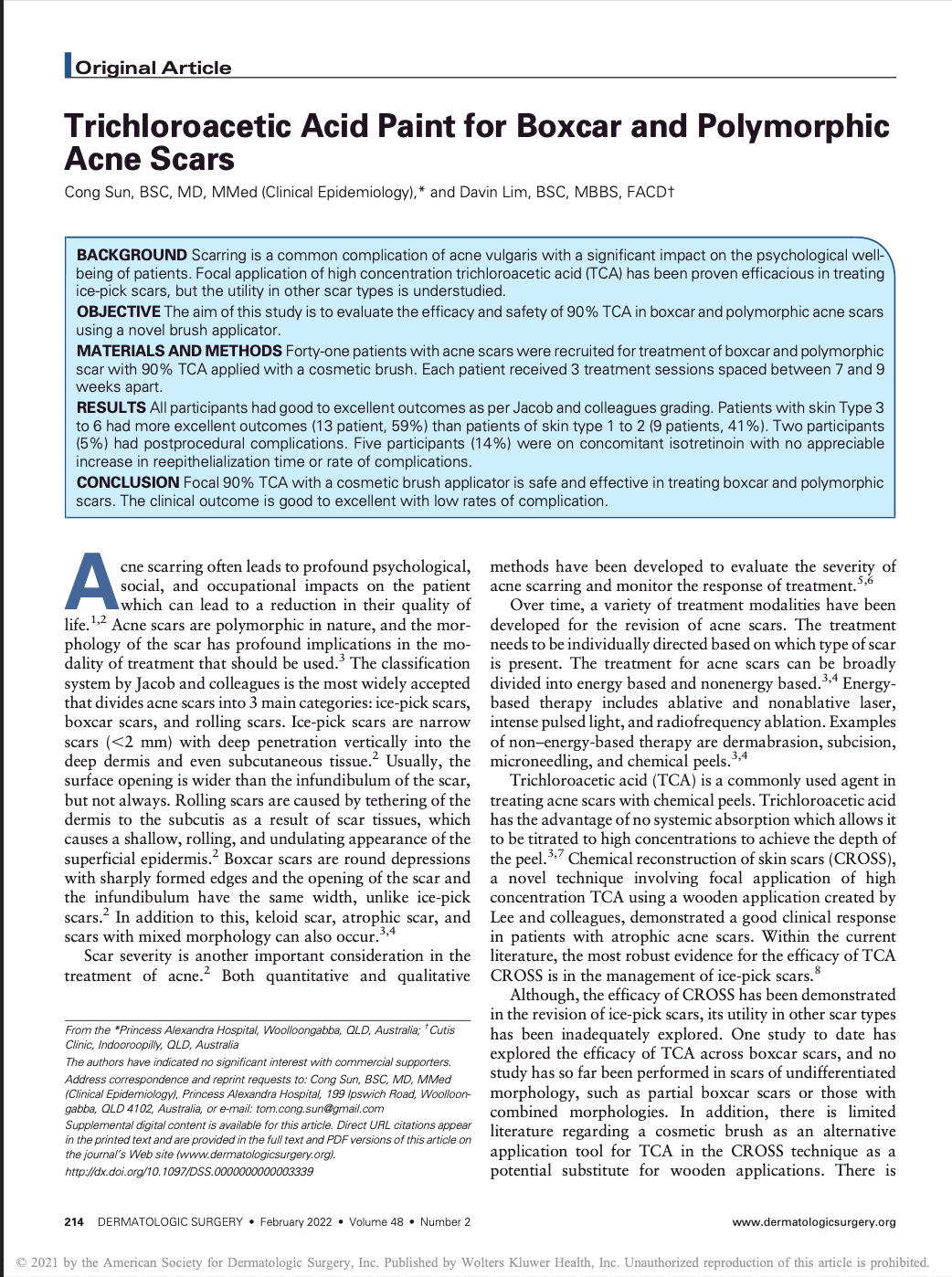
Trichloroacetic acid paint for boxcar and polymorphic acne scars
Sun C, Lim D. Dermatologic Surgery 2022;48(2):214–218.
TCA CROSS was well established for ice pick scars. This study asked whether the same acid could treat boxcar and mixed scars if it were painted on with a fine brush instead of dotted.
Forty-one patients were treated with 90% TCA over three sessions, seven to nine weeks apart. All had good to excellent outcomes. Patients with skin types 3 to 6 had more excellent outcomes than those with fair skin.
Dermatologic Surgery · p. 214
Published research · Dr Lim
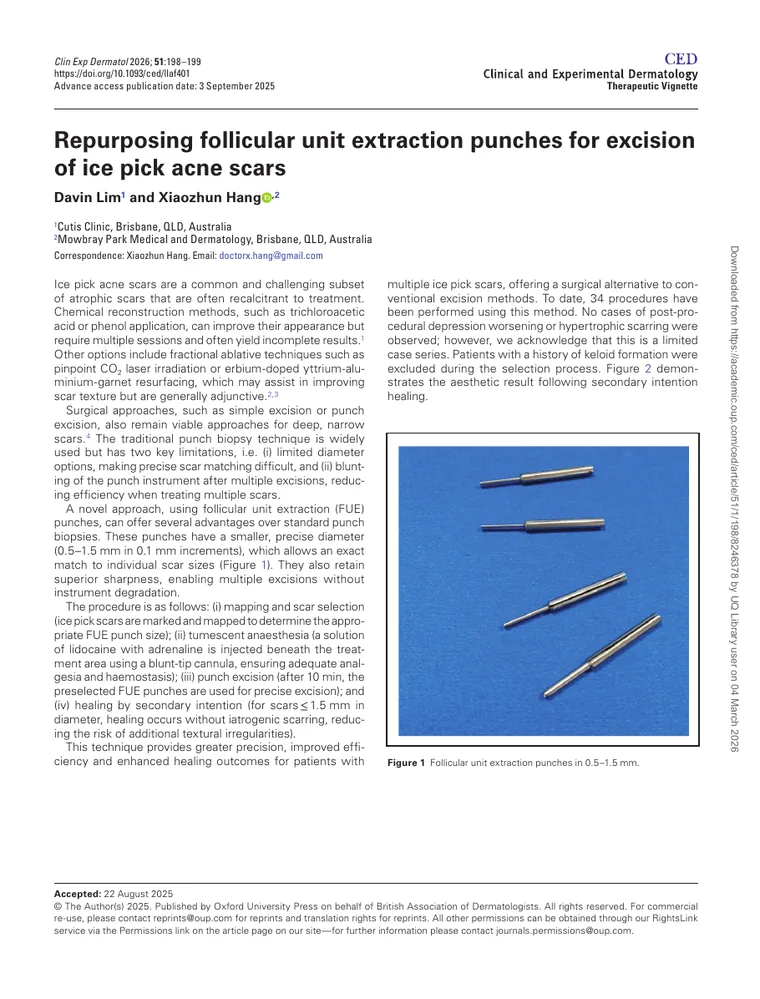
Repurposing follicular unit extraction punches for excision of ice pick acne scars
Lim D, Hang X. Clinical and Experimental Dermatology 2026;51:198–199.
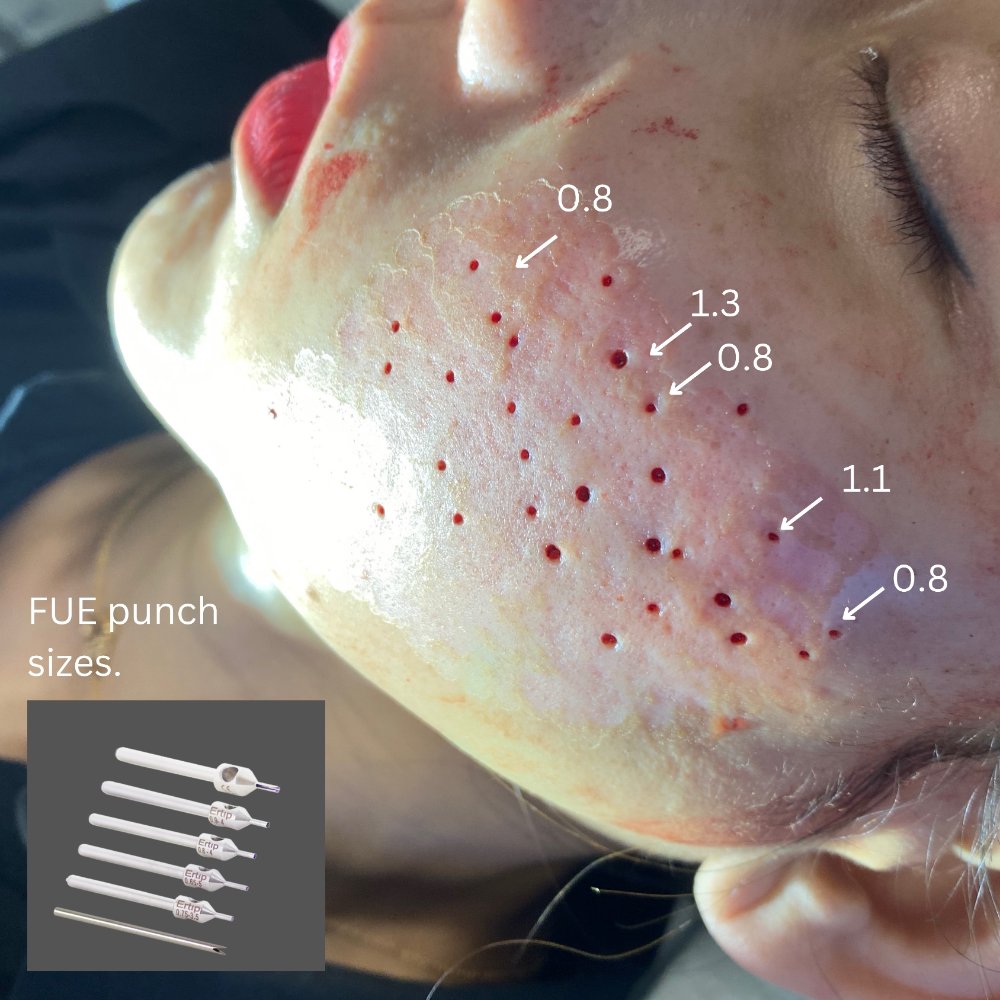
Standard punch biopsy tools come in few sizes and blunt quickly. FUE punches, borrowed from hair transplant surgery, are finer, run from 0.5 to 1.5 mm in 0.1 mm steps, and hold their sharpness for well over 40 excisions. Each ice pick scar can be matched to the exact punch size.
Scars are mapped and sized, the area is numbed, and each scar is removed with its matched punch. Openings of 1.5 mm or less heal on their own, without stitches. Across 34 procedures, no scar worsened and none became raised. It is one of the fastest ways to treat ice pick scars.
Clin Exp Dermatol · p. 198
Opinion · Dr Lim
Are we too reliant on energy-based devices for the treatment of acne scarring?
Lim D. Opinion and Progress in Cosmetic Dermatology 2022;2(3):72–74.
Lasers keep improving, but some scar patterns respond better to manual methods: focal TCA, punch excision, subcision and filler. This paper sets out which scars those are, and why the best results come from combining methods rather than relying on one device.
Common questions
How much does it cost?
How many sessions will I need?
How much downtime is there?
Why can’t a laser fix an ice pick scar?
Is it safe in darker skin?
Does it hurt?

Why I paint rather than dot
Dr Davin Lim · Dermatologist · The Skin Hospital, Sydney — Laser, Procedural and Anaesthetic Division
Classic TCA CROSS dots acid into a scar with a wooden applicator. That works for ice picks but misses the edges of anything wider. A fine, undyed brush lets me follow the shape of each scar, reaching the floor and the wall of boxcars and irregular scars while leaving normal skin untouched.
Where it sits in a scarring plan
First. TCA lifts the deepest scars early, so that by the time we resurface, the laser is working on a much shallower problem. Subcision, resurfacing and injectables follow, in that order, matched to your scar signature.
— Dr Davin Lim, Consultant Dermatologist
Conditions this treats
Related treatments
Book a consultation
Assessment, scar mapping and a written plan, including which of your scars suit TCA CROSS and which need something else.
Book a virtual consultationHave some questions?
Send a message and it will be answered personally. Form endpoint — to be wired in production
See the work before you book
Procedures, technique, before and afters, and the reasoning behind them — posted across three accounts, each with its own focus.