Home›Treatments›Fully ablative erbium laser
Treatment
Fully ablative erbium laser resurfacing
Full resurfacing with a faster recovery. The erbium laser removes the entire damaged surface evenly with very little heat left behind, so new skin grows back in six to nine days and redness settles sooner. It is my main ablative laser for darker and pigment-prone skin.
What it is
An erbium:YAG laser at 2,940 nm is absorbed by water in the skin more strongly than any other resurfacing laser. In fully ablative mode it removes the whole epidermis and a set depth of dermis in even passes, vaporising tissue almost instantly so very little heat spreads into the skin beneath.
New skin grows back from the hair follicles and oil glands below that depth. Less heat means a faster recovery, shorter redness and a lower risk of pigment change. The trade-off is slightly less collagen stimulation than CO₂.
What brings you here?
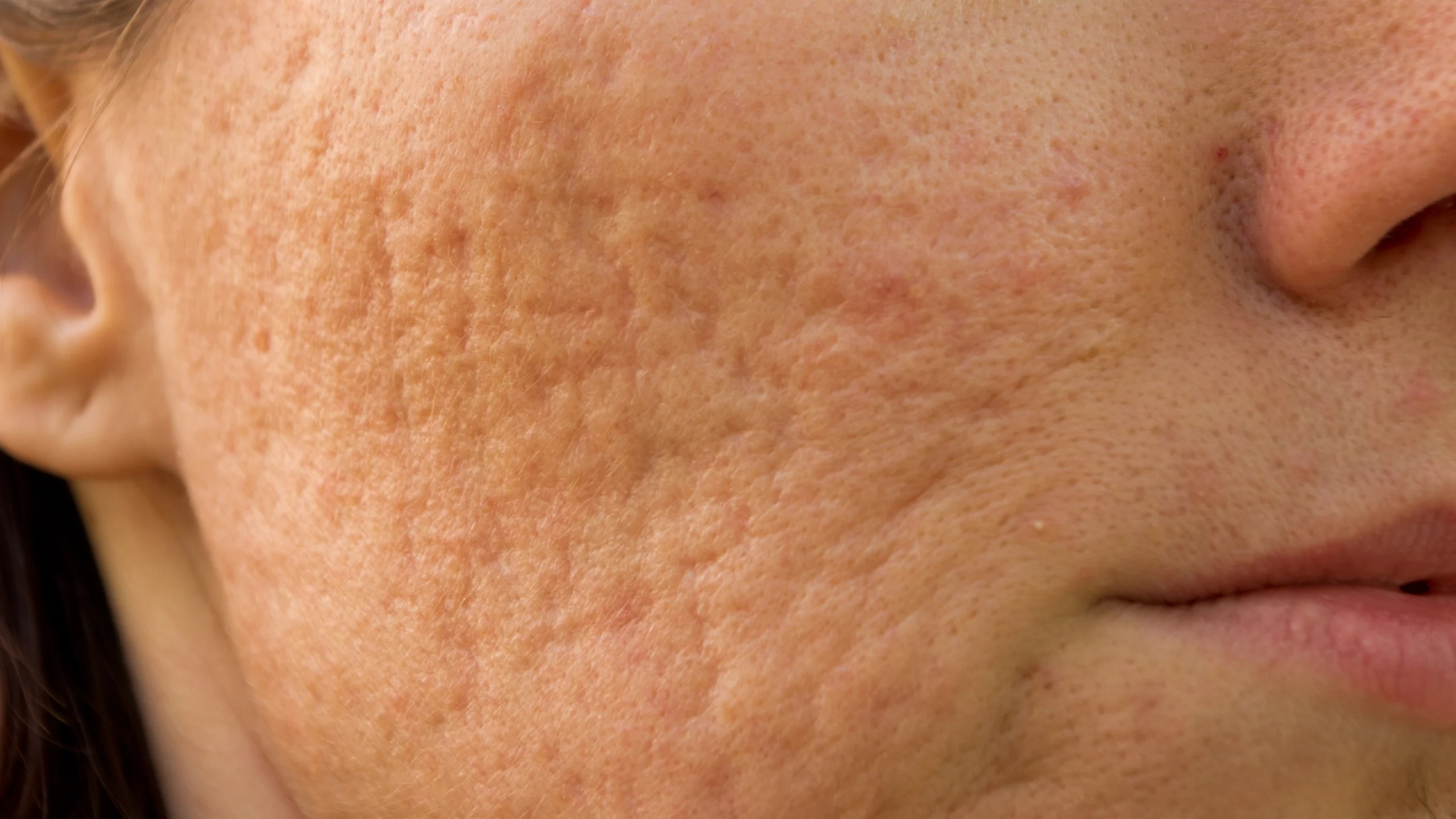 Acne scars →Rolling and boxcar scarring
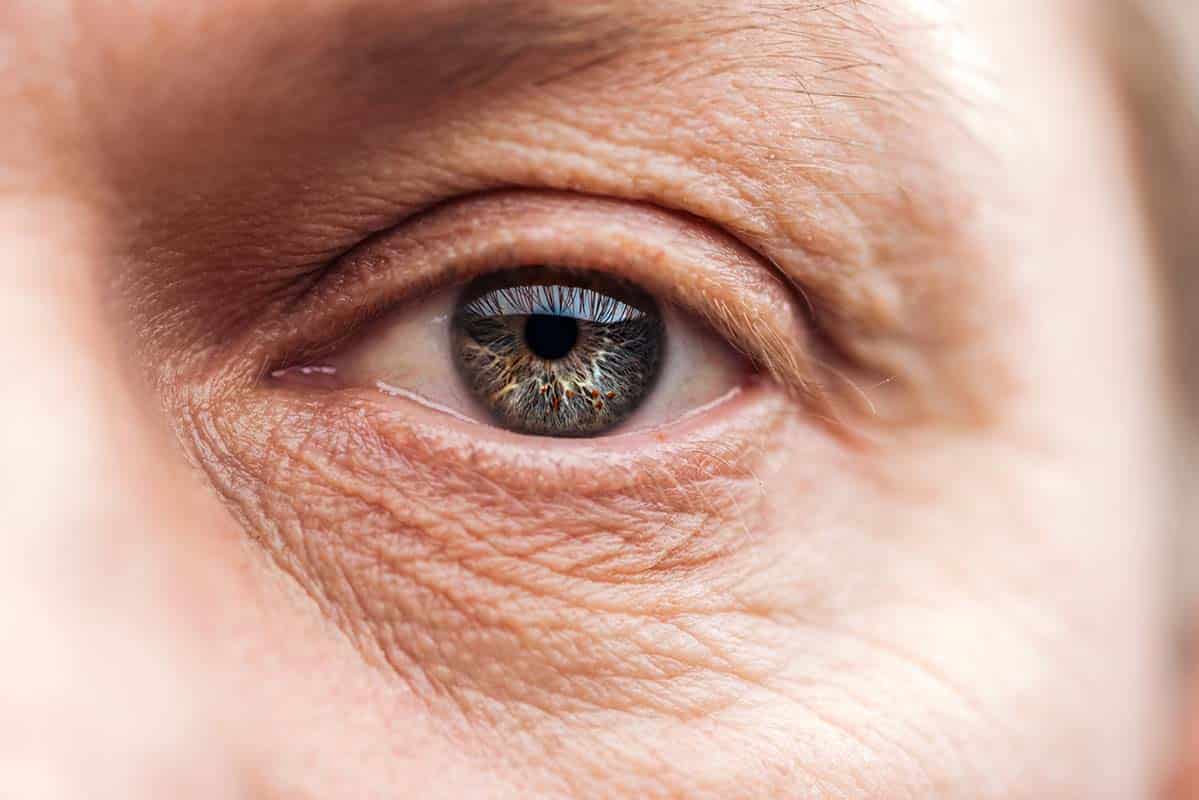 Eye rejuvenation →Crepey lid skin and crow’s feet
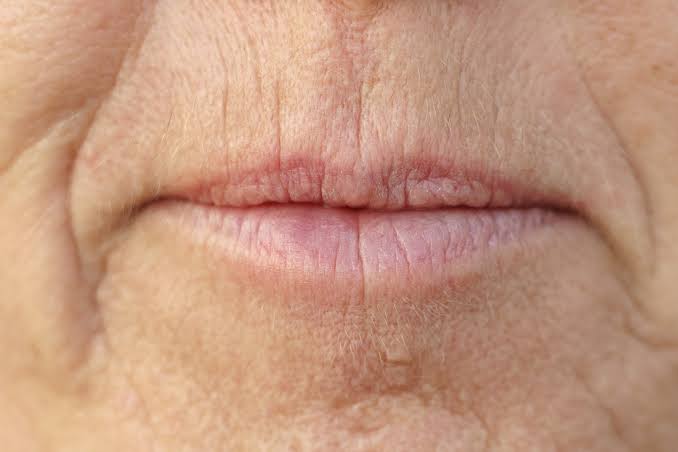 Smoker’s lines →Vertical lines above and below the lips
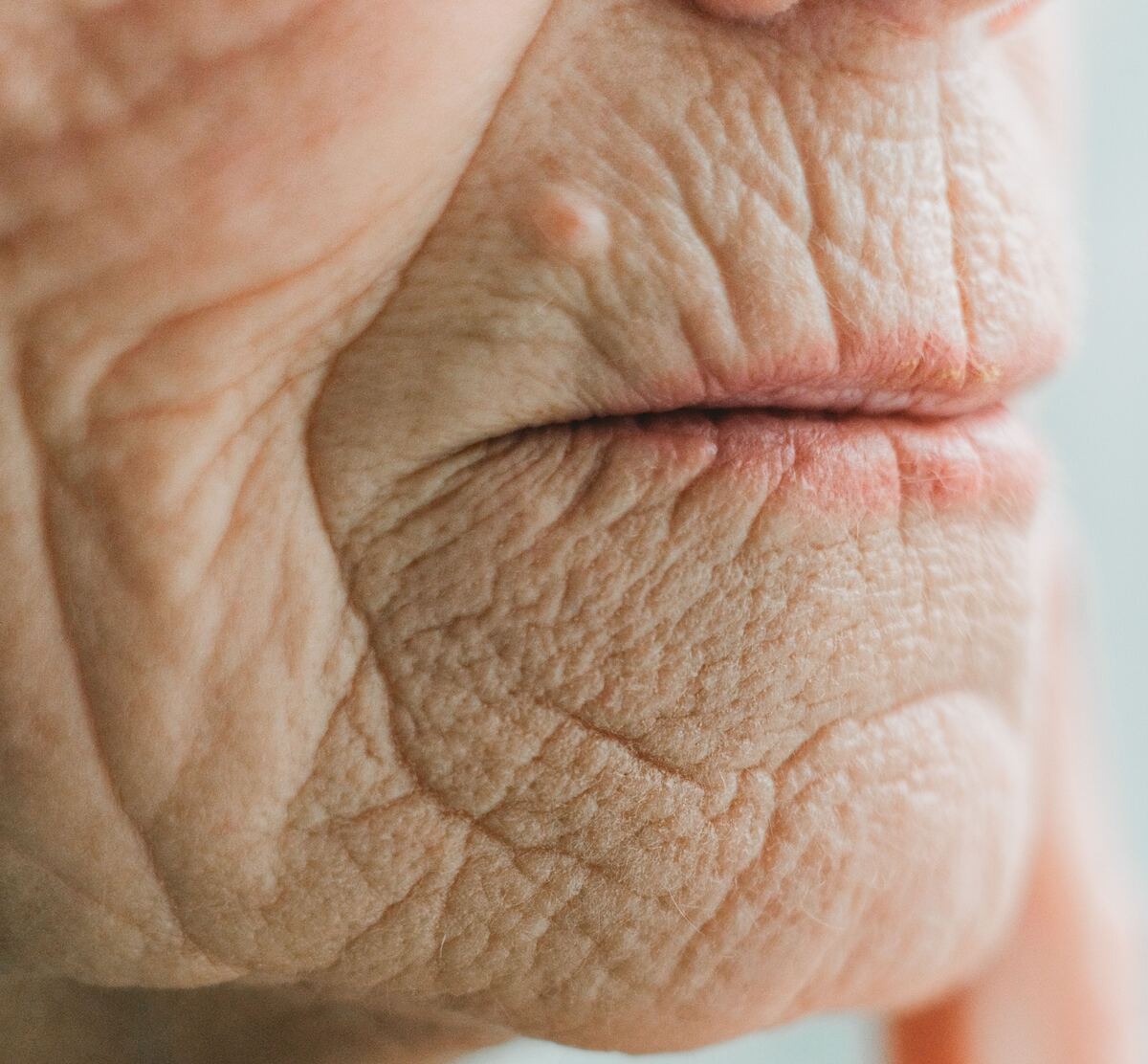 Wrinkles and skin laxity →Etched lines of the lower face
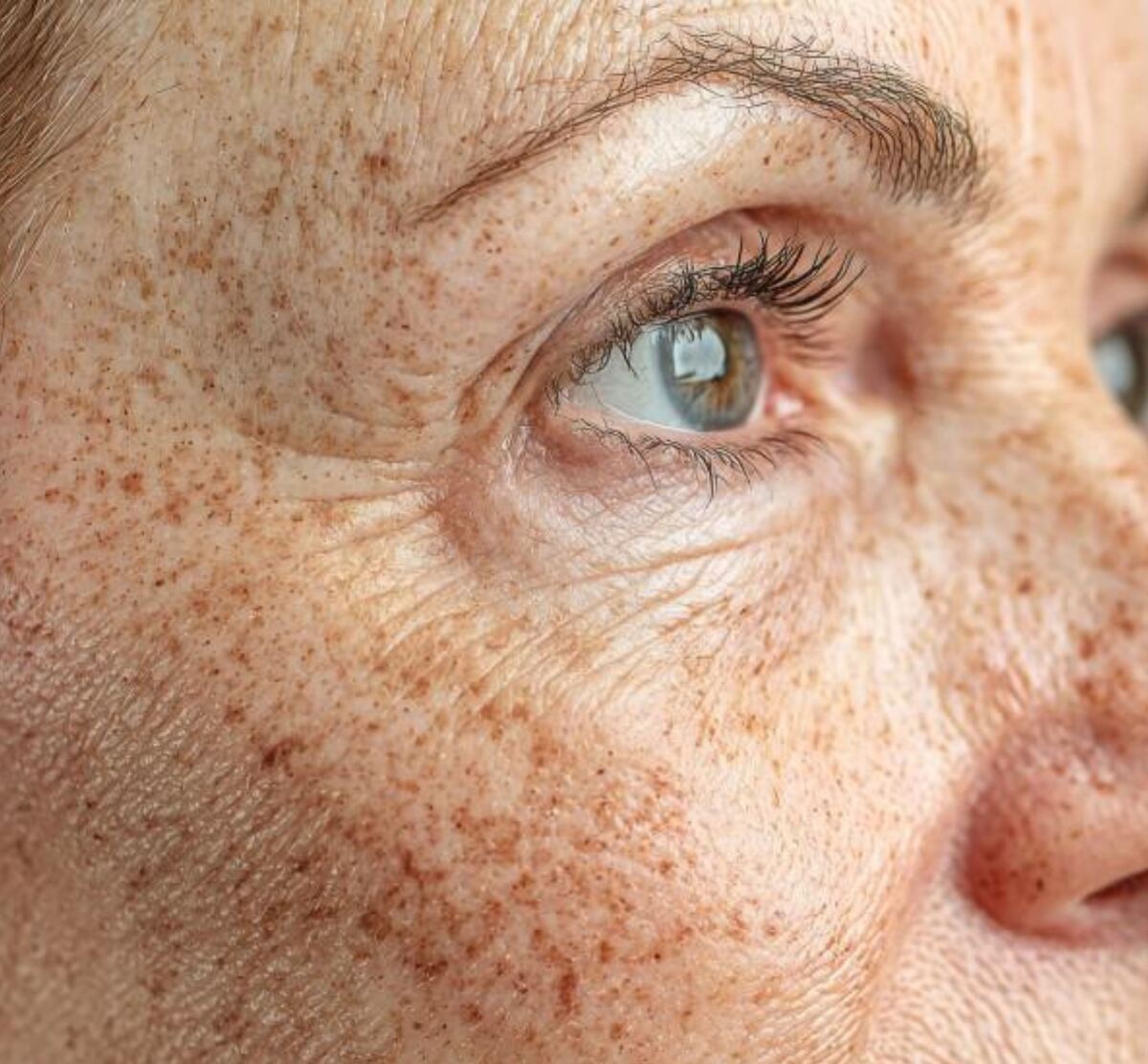 Sun damage →Chronic sun damage with freckling
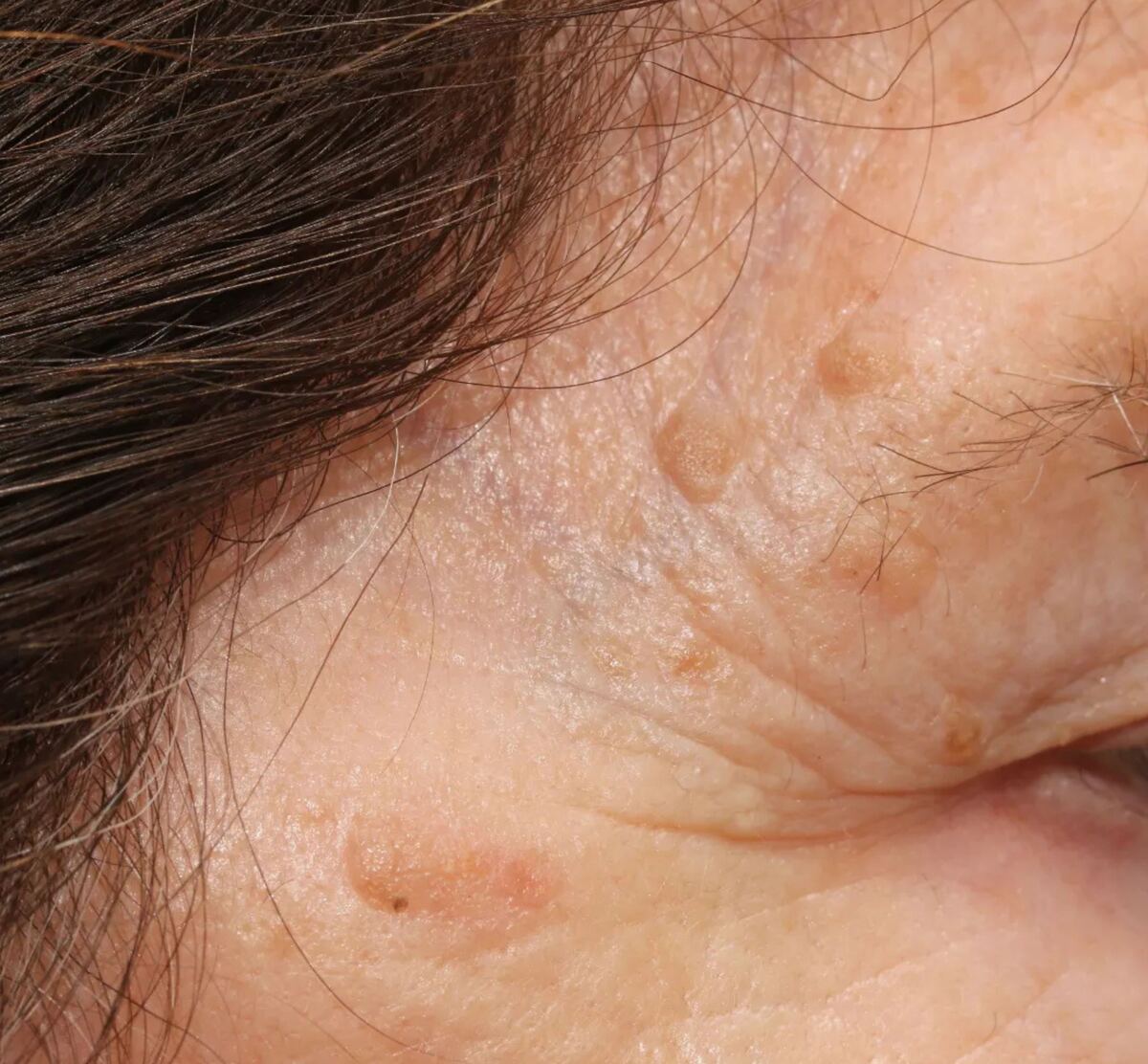 Age warts →Seborrhoeic keratoses at the temple
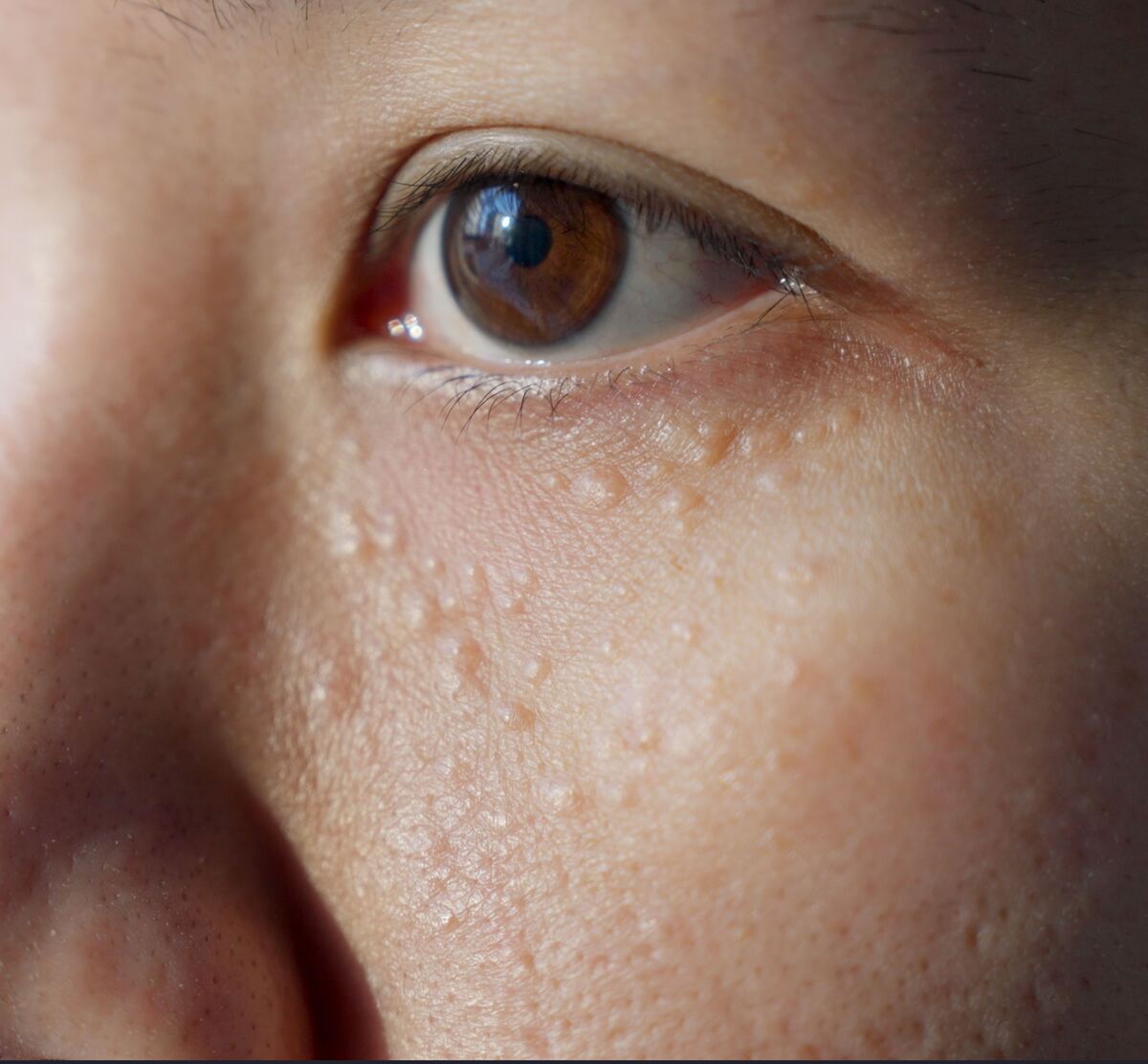 Syringomas →Syringomas under the lower lid
Acne scars
For widespread rolling and boxcar scarring, fully ablative erbium takes the whole surface down to an even depth, and the skin re-forms across a flatter plane. It is the scar resurfacing I reach for in olive and darker skin, where CO₂ carries more pigment risk.
As with CO₂, it is usually the last step of a scar plan. Deep narrow scars are treated with TCA CROSS first, tethered scars are released with subcision, and the resurfacing then evens out what remains. A Medicare rebate applies for acne scars.
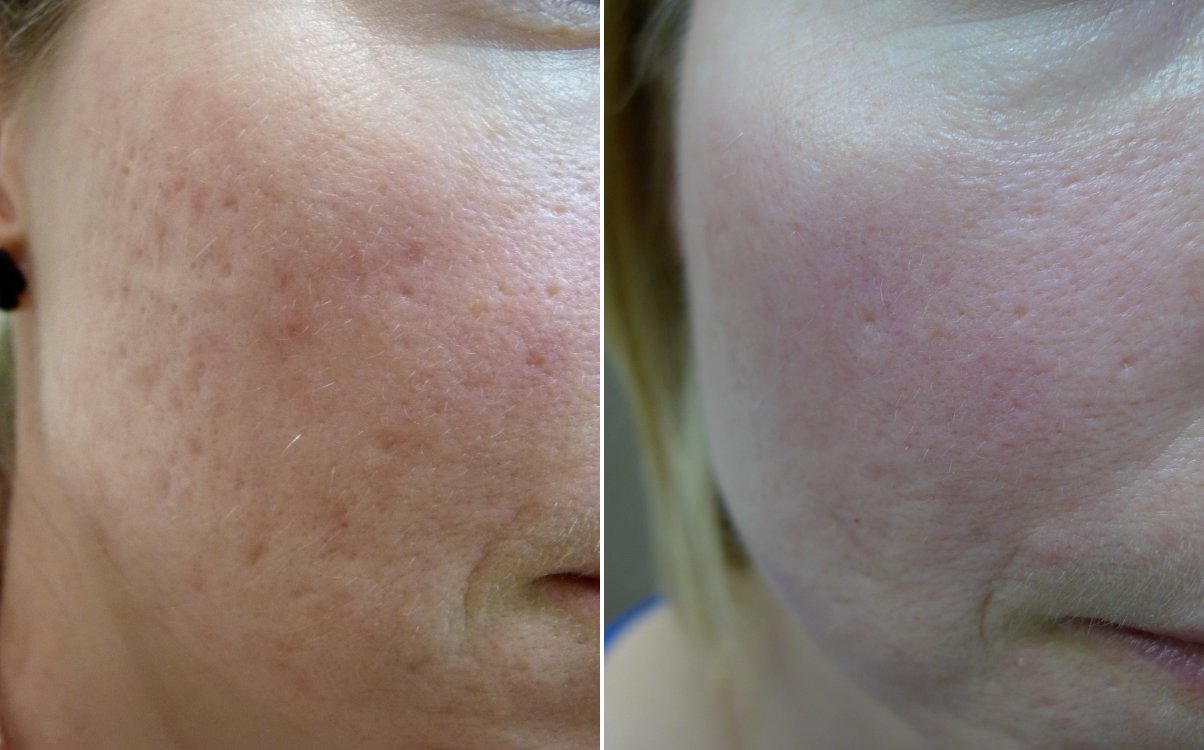 BeforeAfter
What it will not do: replace lost fat. Fat loss sits beneath many deeper rolling scars, and those need soft tissue injectables as well as the laser.
Eye rejuvenation
Thin, creased, crepey lower lid skin and crow’s feet respond well to full erbium resurfacing. Because erbium leaves less heat behind, the eye area heals quickly and with less prolonged redness than CO₂.
Metal corneal shields protect the eyes, and the treatment is feathered out to the cheek so there is no visible border.
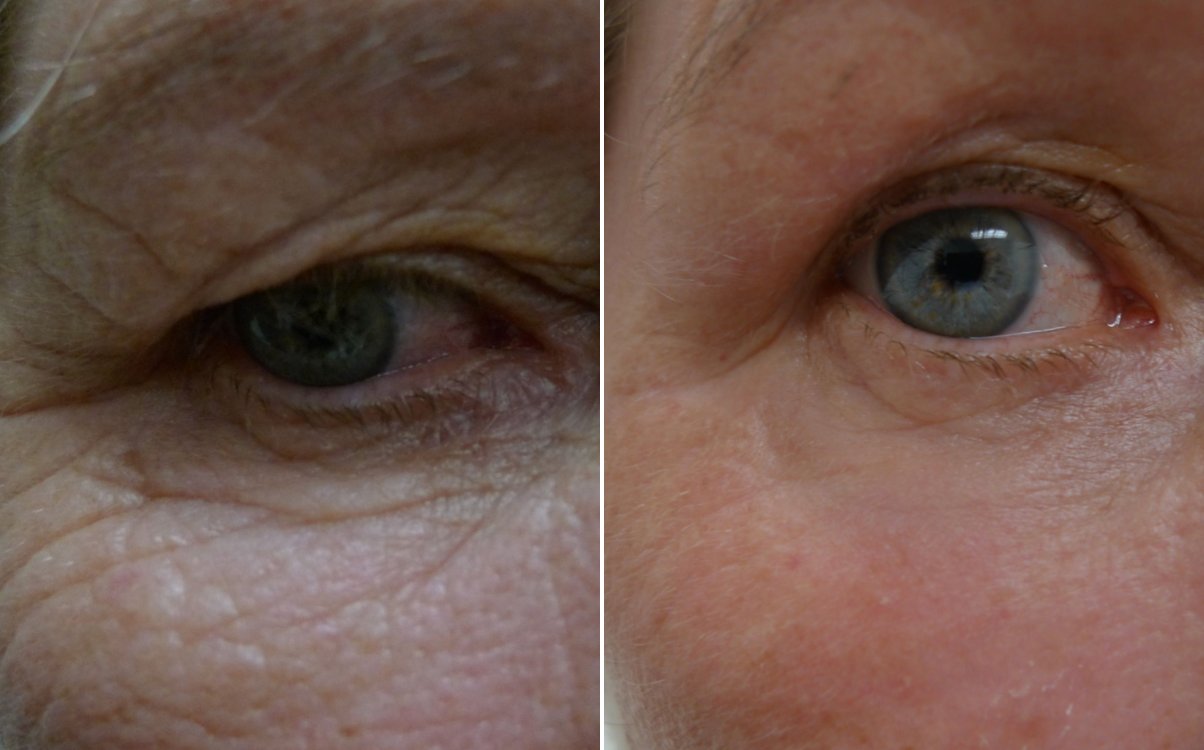 BeforeAfter
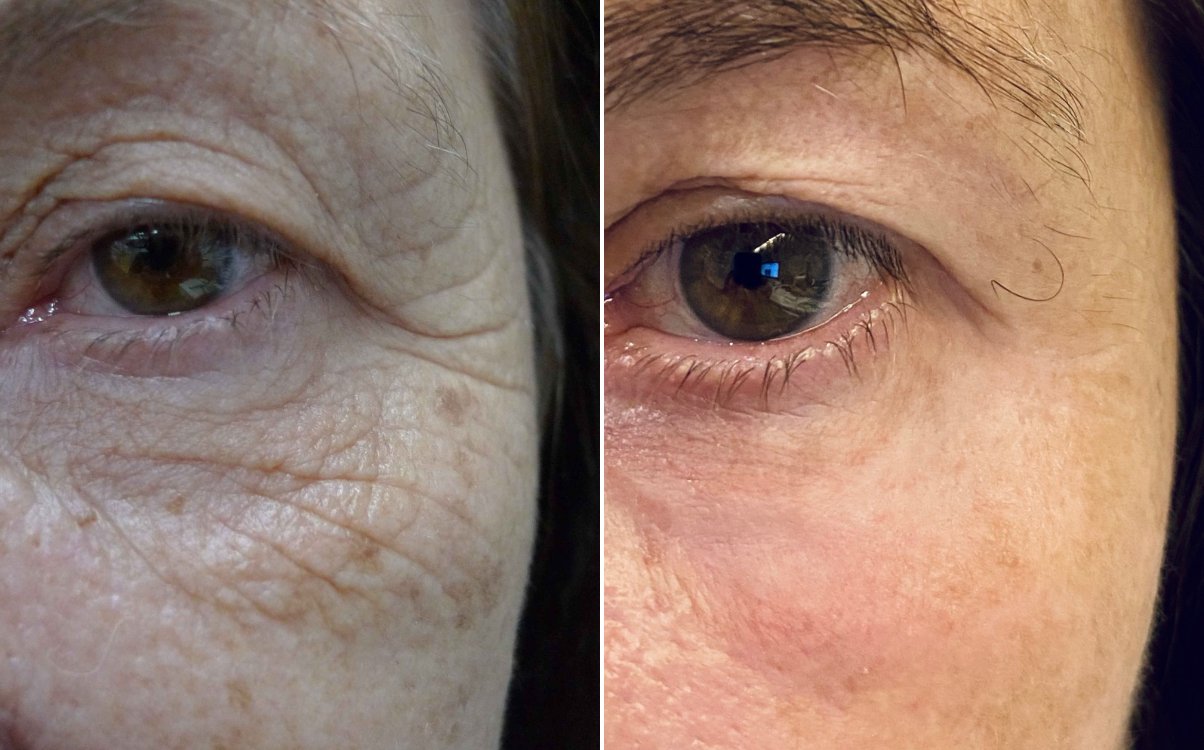 BeforeAfter
What it will not do: remove eye bags or excess lid skin. That is blepharoplasty. Resurfacing improves the skin that sits on top.
- Under-eye concerns →
- Neurotoxin →
Smoker’s lines
Vertical lines above and below the lips are etched into thin, sun-damaged skin. Full erbium resurfacing takes the surface down evenly and lets it re-form without the creases, with a shorter recovery than CO₂.
For the deepest lines I often add fractional CO₂ in the same session for extra collagen stimulation. See hybrid resurfacing below.
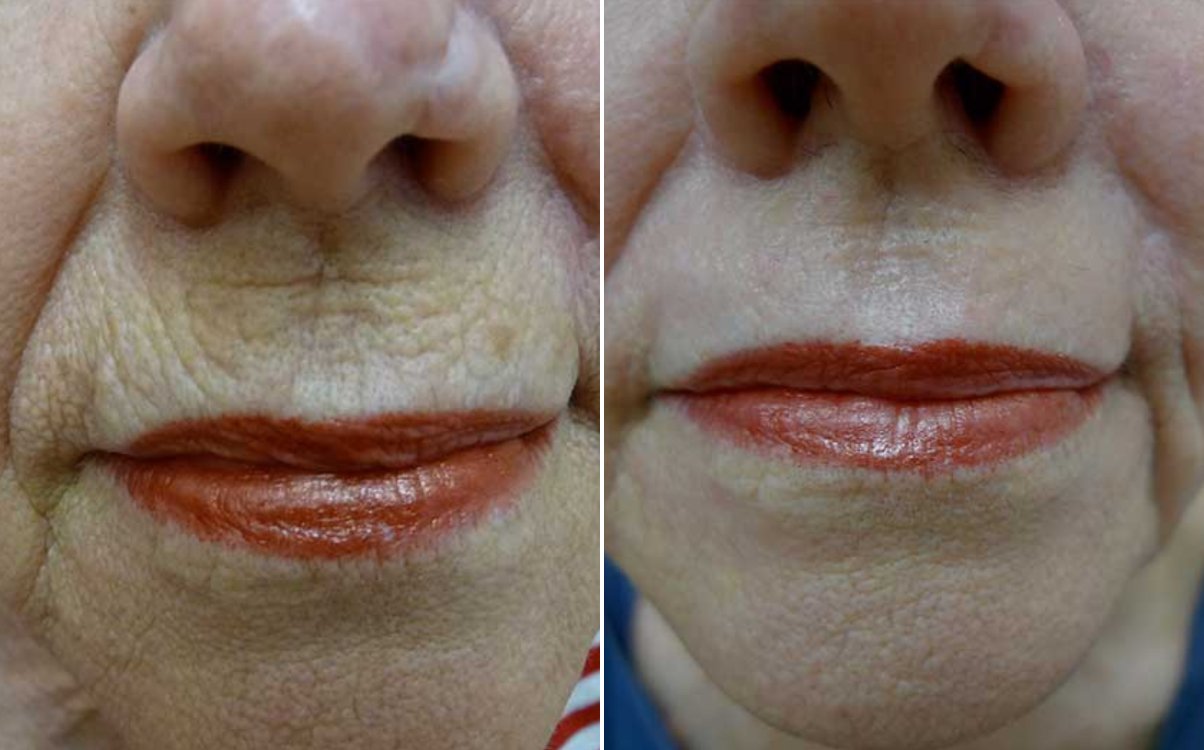 BeforeAfter
What it will not do: work while you are still smoking, or add volume to the lip. Volume is a separate conversation, best had once the skin has healed.
- Lip lines →
- Fully ablative CO₂ →
Wrinkles and skin laxity
Erbium treats lines that are still there when your face is still, and improves the crepey texture of ageing skin. It tightens less than CO₂, so where tightening is the priority I combine the two.
It changes the quality of the skin, not where it sits. Skin that needs repositioning is a surgical question.
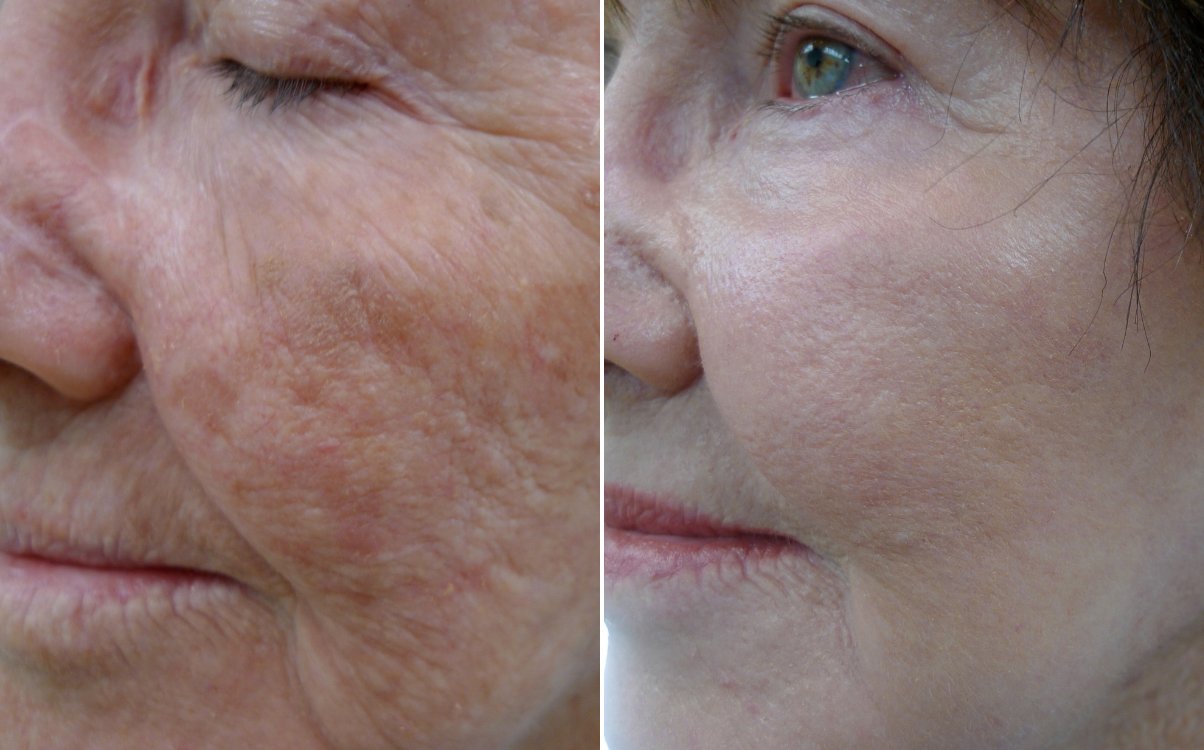 BeforeAfter
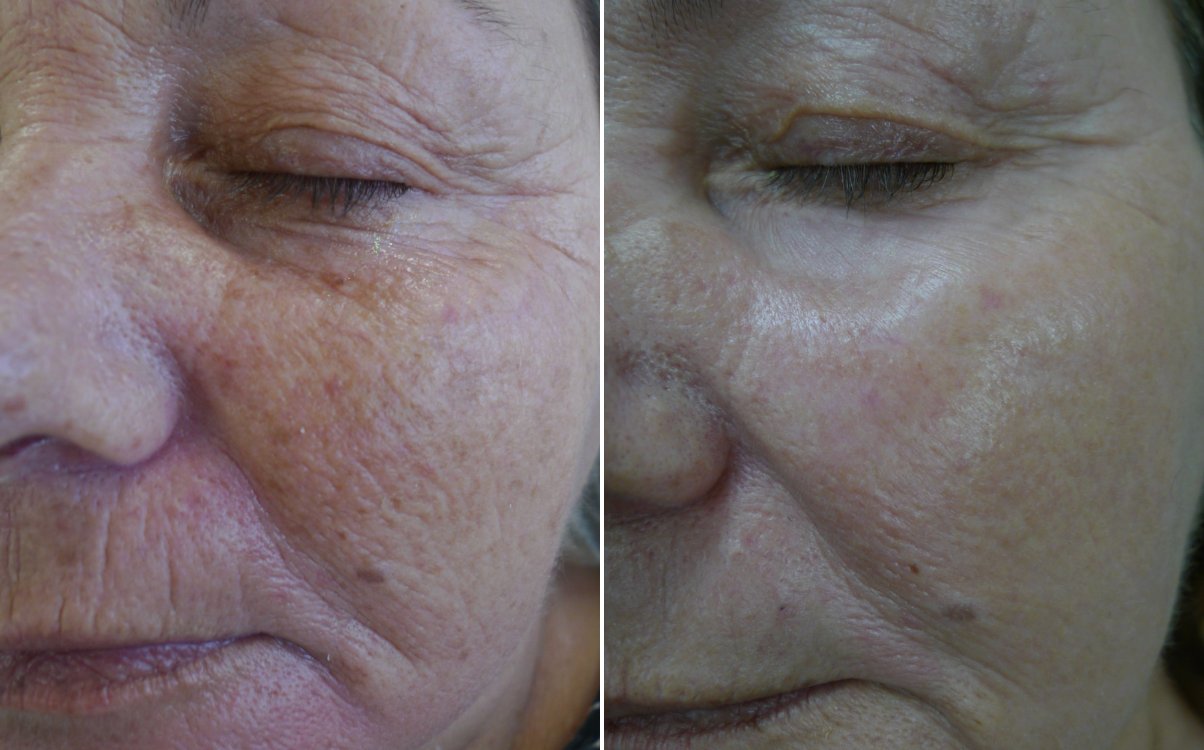 BeforeAfter
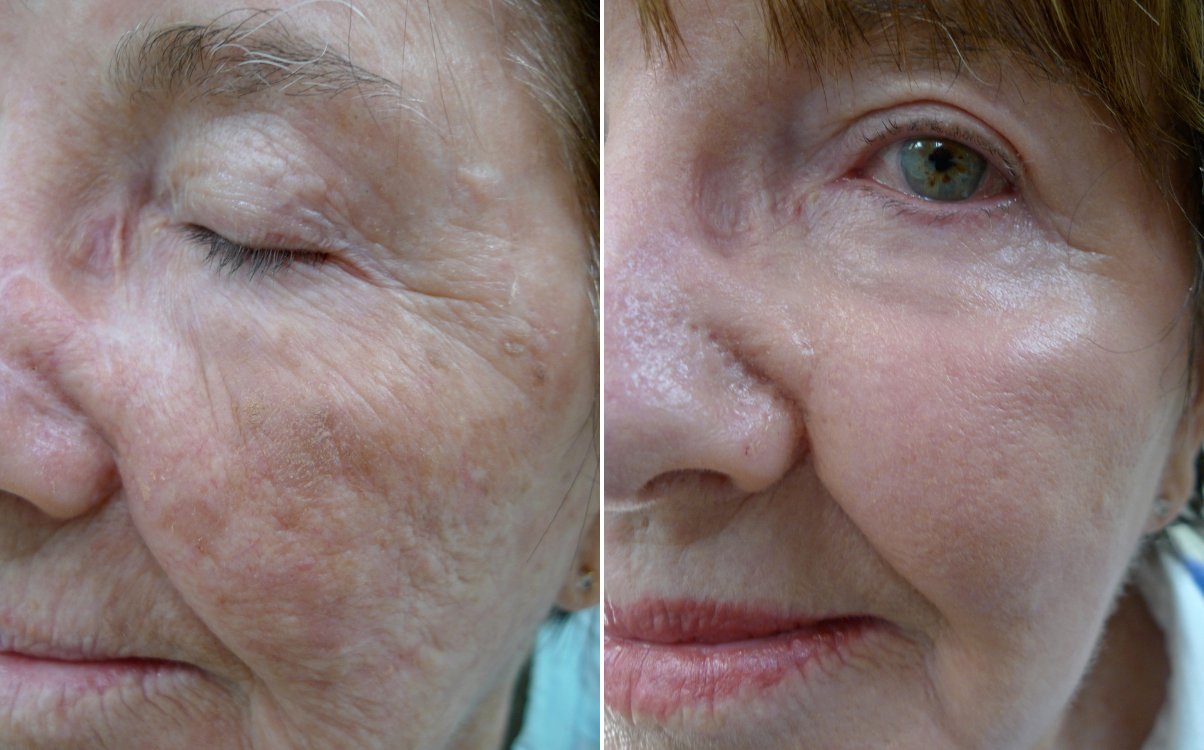 BeforeAfter
What it will not do: replace a facelift, treat movement lines, or restore lost fat. Movement lines respond to neurotoxin, and volume to soft tissue injectables.
- Wrinkles →
- Neurotoxin →
Sun damage
Mottled pigment, freckling, rough texture and pre-cancerous change sit in the surface layer, which full erbium resurfacing replaces in a single treatment.
For people with widespread actinic damage it is field treatment as well as rejuvenation, and can reduce the number of new lesions over the following years.
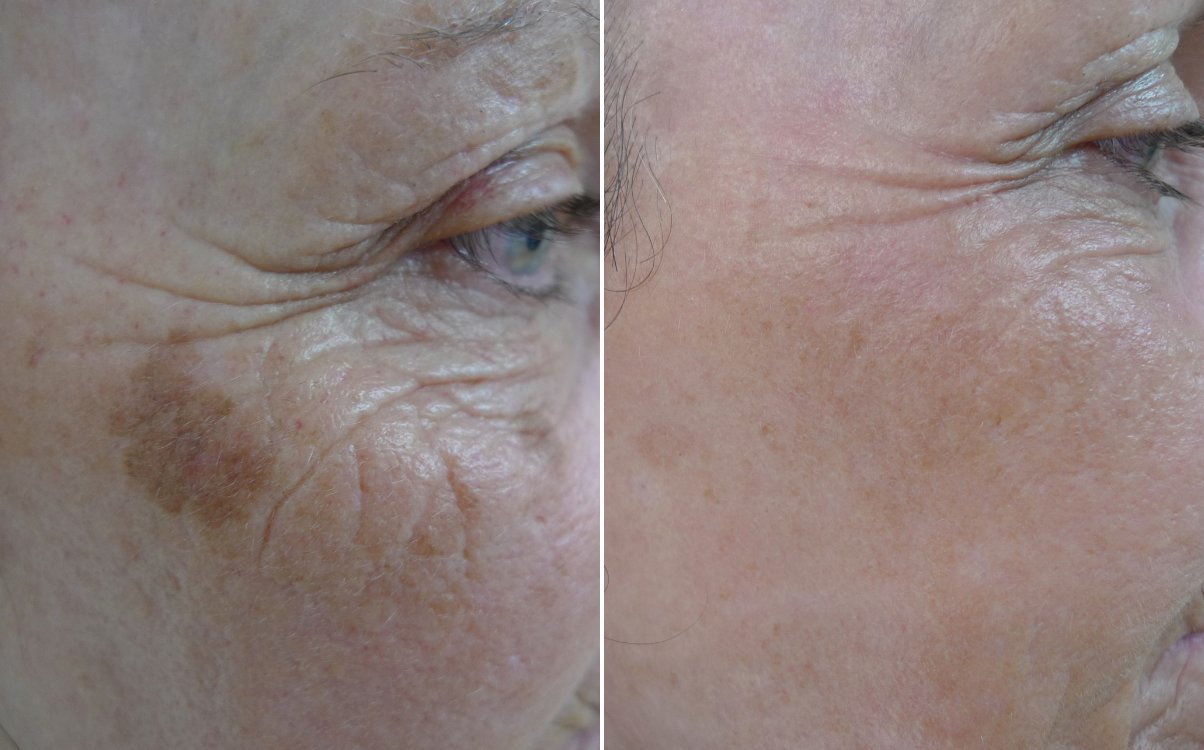 BeforeAfter
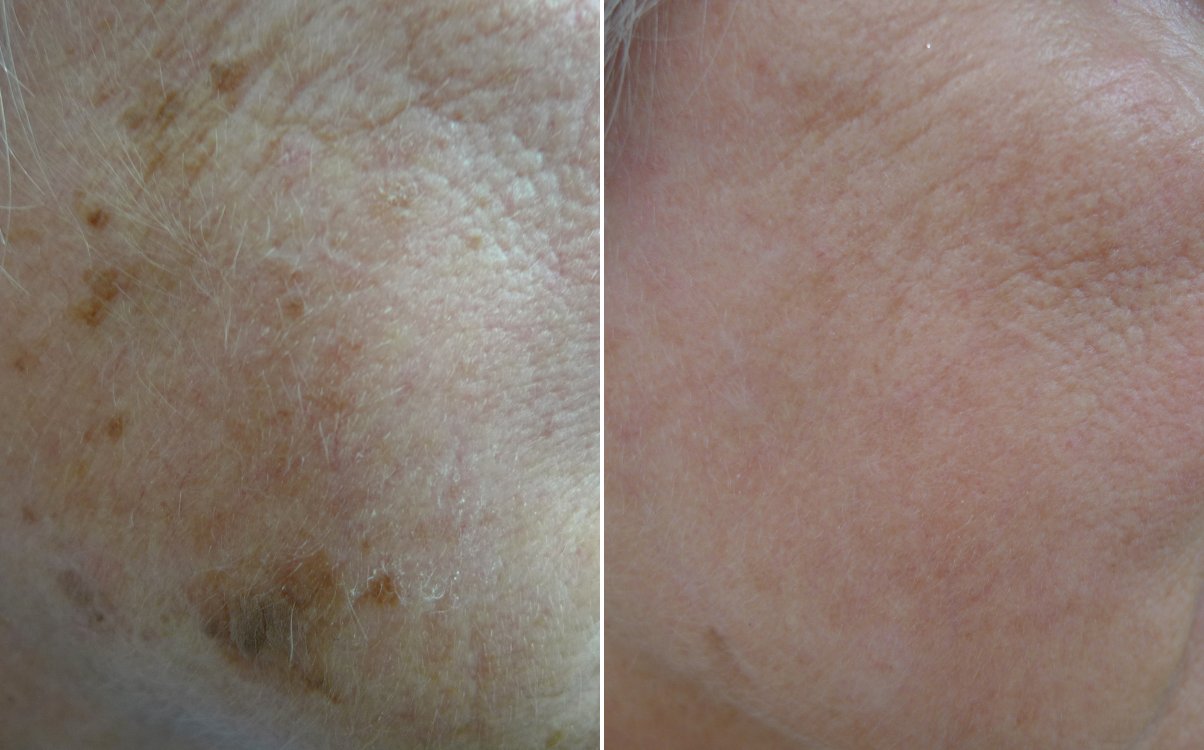 BeforeAfter
What it will not do: clear melasma, or protect you from future sun. Melasma can flare after resurfacing.
- Sun damage →
- Skin cancer →
Age warts
Age warts, or seborrhoeic keratoses, are raised, waxy brown growths that sit entirely in the surface layer. Erbium vaporises them layer by layer with very little heat, so each one can be taken down flush with the surrounding skin.
Scattered lesions are treated individually. Where there are many across a sun-damaged face, they can be cleared as part of a full resurfacing.
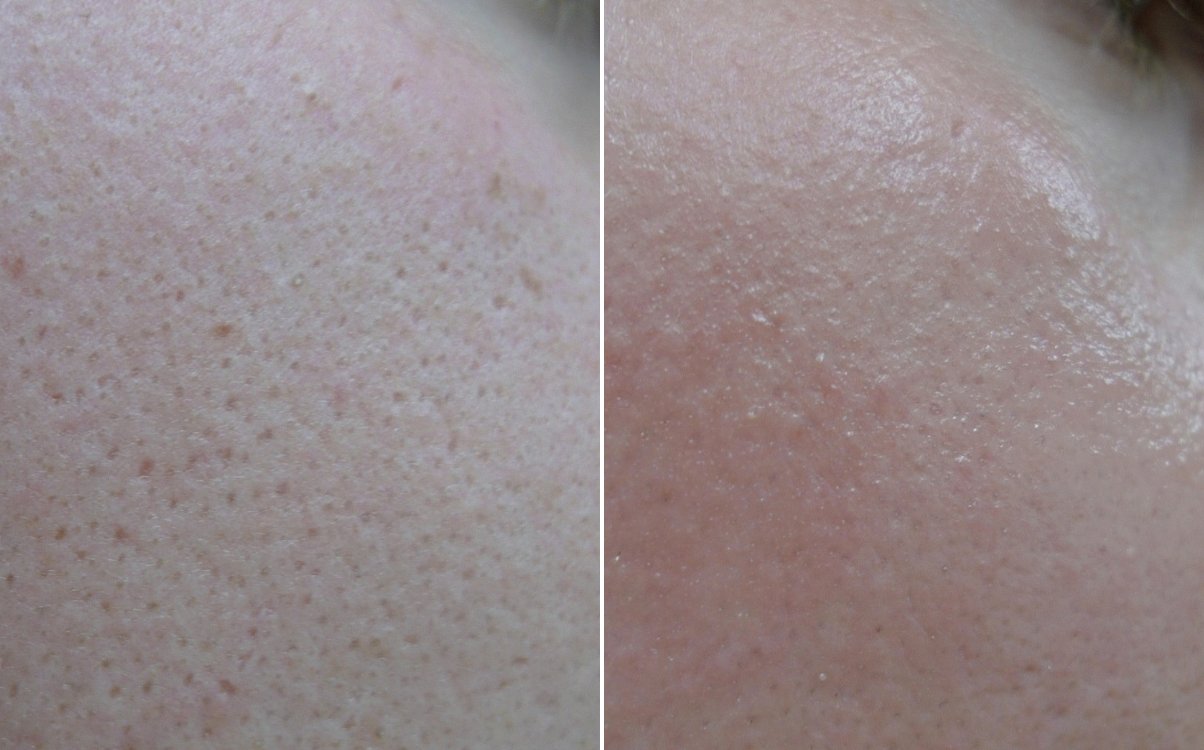 BeforeAfter
What it will not do: stop new age warts forming. They tend to keep appearing with age, and new ones can be treated as they arise.
- Age warts →
Syringomas
Syringomas are small, firm, skin-coloured bumps from overgrown sweat ducts, most often under the eyes. They sit deeper than they look, so the laser has to be precise: erbium removes them in fine layers without the heat that would risk scarring thin lid skin.
Improvement is significant, but syringomas are stubborn. A second treatment is sometimes needed.
What it will not do: guarantee they will not return. Syringomas can recur over time and may need maintenance.
- Syringomas →
Erbium versus CO₂ resurfacing
Both lasers remove the entire surface. The difference is heat. Erbium ablates cleanly and leaves little behind, CO₂ leaves more, and that heat drives both its extra tightening and its longer recovery.
| Fully ablative erbium | Fully ablative CO₂ | |
|---|---|---|
| Recovery | 6–9 days | 10–14 days |
| Redness | Up to 3 months | Up to 6 months |
| Collagen stimulation | +++ | ++++ |
| Skin types | All, including darker and pigment-prone skin | Fair skin |
| Best when | You want a faster recovery, or your skin tends to pigment | Maximum tightening and collagen matter most |
I use erbium mainly for olive and darker skin types, for lighter skin with a tendency to pigment, and for anyone who needs a faster recovery. Fully ablative CO₂ remains the stronger choice for fair skin when collagen is the priority.
Hybrid dual-wavelength resurfacing
My preferred way of ablative lasingMost often, I combine full ablative erbium resurfacing with fractional CO₂ in the same treatment. This is termed hybrid dual-wavelength laser resurfacing.
It gives the depth and collagen-stimulating potential of CO₂ while keeping recovery close to that of erbium.
The balance changes with each patient. Some get more CO₂ and less erbium for greater collagen stimulation. Others get more erbium and less CO₂ for a faster recovery and a lower chance of long-term pigment change and redness.
The exact densities and power settings are explained at your consultation. Every treatment is bespoke, tailored to you, your recovery time and the job.
Everything below applies to the above conditions
The procedure and the recovery are the same whichever concern brought you here. Only the depth and the area change.
What happens on the day
- Preparation, weeks before
Pigment-preparing topicals, especially for olive and darker skin, and an antiviral started before treatment to prevent cold sores.
- Photographs and marking
Standard photographs, then the treatment areas and feathering borders are marked.
- Anaesthetic
Nerve blocks with sedation for smaller areas. Full-face treatment is done under general anaesthetic with an anaesthetist.
- The treatment
The Joule is passed evenly across each area to the planned depth, and the edges are blended into untreated skin so there is no line.
- Immediately after
Thick occlusive ointment, cool compresses and written aftercare. You go home the same day and need someone with you that night.
Recovery, at a glance
My team and I will advise you of your recovery. With fully ablative erbium resurfacing, plan for about a week away from work and social commitments, and up to a few months of redness. Settings matter, and so does aftercare.
Best combined with
Erbium resurfacing pairs well with collagen-stimulating injections. Working alongside your immune system, they add to the new collagen the laser has already set in motion.
They go in once the skin has settled, between 4 and 12 weeks after resurfacing. I place them where they do the most good: into areas of scarring, and into key zones where firmer, better-supported skin helps lift and tighten, such as the jowls, smile lines and brow.
Most people need 1 to 3 injections, spaced 8 to 12 weeks apart, depending on how much collagen we are aiming to build.
Risks
| Effect | Frequency | Notes |
|---|---|---|
| Swelling, weeping, crusting | Expected | The first week. This is healing, not a complication. |
| Prolonged redness | Expected | Up to 3 months is normal, fading steadily. |
| Temporary darkening | Common | More likely in olive and darker skin, and with sun exposure. Reduced with pre-treatment topicals. |
| Acne or milia | Common | From ointment during healing. Settles with a change of regimen. |
| Cold sore flare | Uncommon | Prevented with antivirals started before treatment. |
| Infection | Uncommon | Reviewed closely in the first week and treated promptly. |
| Loss of pigment | Rare | Less likely than with CO₂, because less heat is left in the skin. |
| Scarring | Rare | Most often linked to infection. |
Who is and isn't a candidate
Suited to all skin types, including olive and darker skin and lighter skin that pigments easily, in people who want full resurfacing with a shorter recovery and can commit to strict sun protection afterwards.
Tell me beforehand if you have a history of cold sores, as treatment can bring them out. A simple antiviral is the solution.
Also tell me if you are pregnant, have used oral retinoid therapy in the last six months, form keloid scars, have melasma, or have a tan.
Don't come in for treatment in the month before a big event.
Common questions
How much does it cost?
How is erbium different from CO₂?
How much downtime is there?
Is it suitable for darker skin?
How many sessions will I need?
Does it hurt?
The laser I use for this job
Dr Davin Lim · Dermatologist · The Skin Hospital, Sydney — Laser, Procedural and Anaesthetic Division
With erbium, what matters is removing tissue to a precise, even depth with as little heat as possible, and being able to add heat back when a deeper result is needed. The Joule does both.
 ScitonJouleA 2,940 nm erbium platform with controllable ablation depth and adjustable coagulation, from clean cold ablation to a warmer pass for extra tightening.
Balanced aesthetics
Resurfacing is exceptional for skin quality: texture, etched lines, sun damage and scarring. It does not replace lost fat or lift tissue that has descended. Soft tissue and collagen-stimulating injectables restore structure, neurotoxin softens movement, and the laser does the one job it does best.
— Dr Davin Lim, Consultant Dermatologist
Conditions this treats
Related treatments
Book a consultation
Assessment, photographs and a written plan, including whether erbium, CO₂ or a hybrid suits your skin.
Book a virtual consultationHave some questions?
Send a message and it will be answered personally. Form endpoint — to be wired in production
See the work before you book
Procedures, technique, before and afters, and the reasoning behind them — posted across three accounts, each with its own focus.