Publications by topic
Lasers & energy devices
What lasers do well, and where the honest limits sit — across pigment, scarring and sun damage. Several of these papers describe a complication rather than a success, which is usually where the useful detail is.
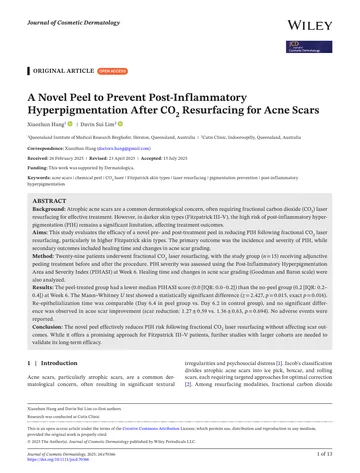
Stopping dark marks after CO₂ laser for acne scars Dark marks after CO₂ laser are the reason many people with darker skin are never offered the treatment at all. A peel given before and after the laser reduced them — without slowing healing or costing any of the scar improvement.
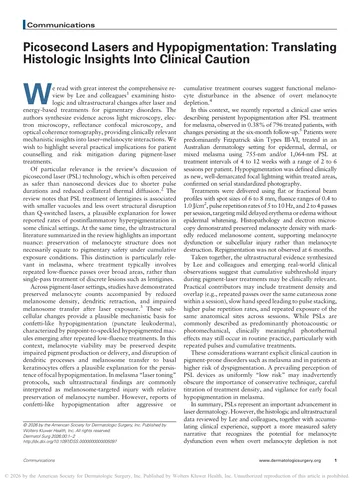
When pico lasers leave pale spots Picosecond lasers are routinely described as the safe option for pigment. In a series of 796 patients treated for melasma, a small number developed pale spots that had not repigmented six months later — and the reason is not what most people assume.
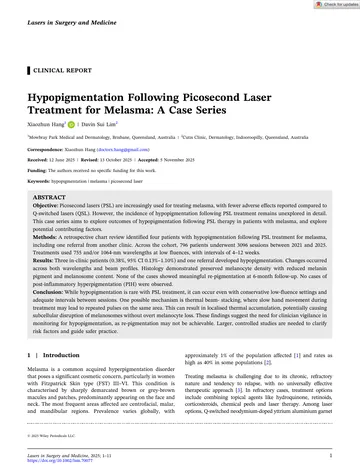
Pale spots after pico laser for melasma Four patients treated with picosecond laser for melasma developed pale spots that had not recovered six months later. The biopsies showed the pigment cells were still alive — they had simply stopped making pigment.
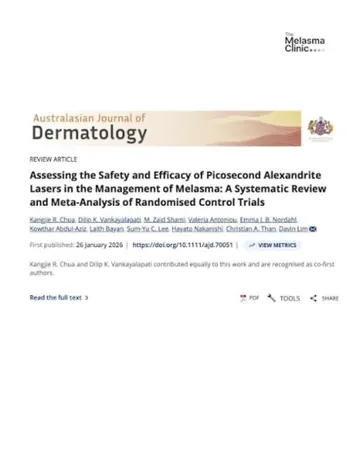
Does pico laser beat the cream for melasma? Pooling every randomised trial that has been done, the standard prescription cream reduced melasma more than the picosecond alexandrite laser did — and the laser caused more pigment rebound than topical treatment.
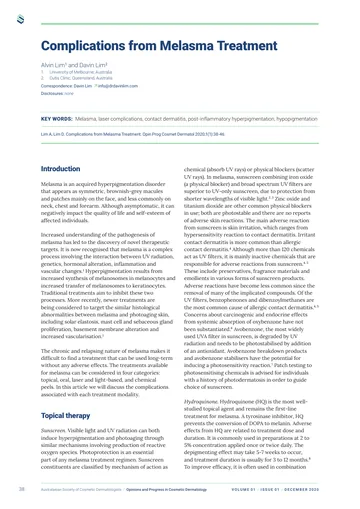
What can go wrong treating melasma Every treatment that works on melasma has a way of going wrong, and several of them go wrong by making the pigment worse. This is the complication profile of each one, set out so the risk can be weighed before treatment rather than after.
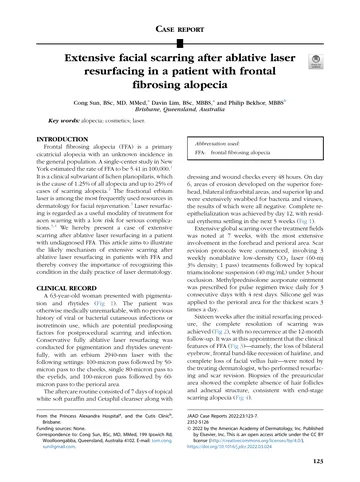
Why hair loss matters before laser resurfacing A woman had a routine ablative laser resurfacing, healed normally, and then scarred extensively across her whole face. The reason was a hair-loss condition nobody had diagnosed — because skin heals from stem cells that live in hair follicles, and hers were gone.
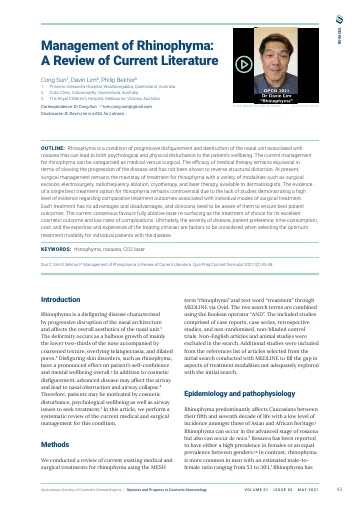
Rebuilding a nose thickened by rosacea Long-standing rosacea can thicken the skin of the nose until its shape is lost. Tablets do not reverse it. It has to be physically reshaped, and there are at least six ways of doing that — this review sets out what each one is good at, what it risks, and why fully ablative CO₂ laser has become most clinicians' first choice.
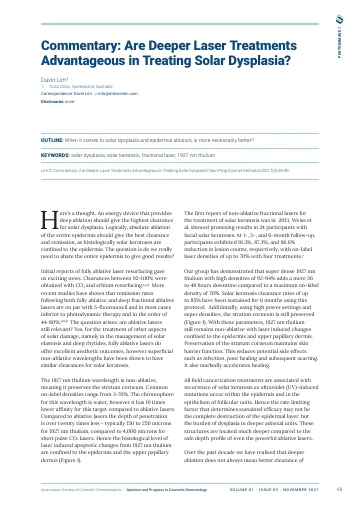
Why the gentler laser clears sun damage better Sun spots live in the outermost layer of skin, so a laser that removes that whole layer ought to clear them best. In practice it does not. A non-ablative wavelength that penetrates twenty times less shallowly gets comparable or better clearance, with a fraction of the downtime — and the interesting question is why.
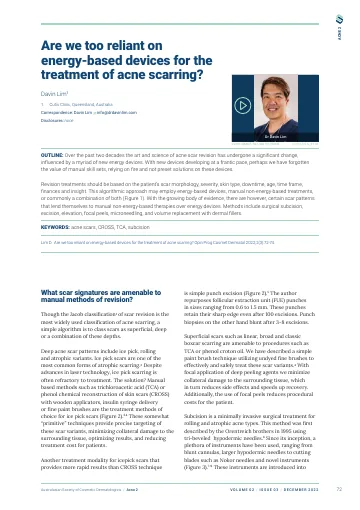
When a needle beats a laser for acne scars Laser and energy devices have transformed acne scar treatment, and they are not the answer to every scar. Some patterns — ice pick scars in particular — respond far better to precise manual techniques using instruments as simple as a needle, a tiny punch or a fine paint brush. This piece argues that the skill has been quietly displaced by the machine, and sets out which scars call for which.
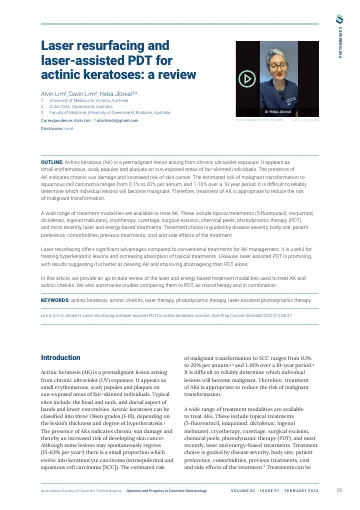
Lasering sun spots before the light treatment Photodynamic therapy struggles with thick, crusted sun spots because the cream cannot get through them. Running a fractional laser over the area first opens channels for it — and across a series of trials that combination clears more, recurs less and improves the look of sun-damaged skin more than the light treatment alone.
Elsewhere on this site
Where to read more
Last updated September 2026.
Have some questions?
Send a message and it will be answered personally. Form endpoint — to be wired in production