Picosecond lasers such as PicoSure Pro are now my workhorse for pigmentation. They break up pigment without heating the skin around it, and in pigment-prone skin, heat is the enemy. But a laser is only as good as the diagnosis and the plan around it.
Diagnosis comes first
Melasma, post-inflammatory pigment and sun spots look alike and behave completely differently. Treating melasma as if it were a sun spot is one of the most common, and most damaging, mistakes I see. Three brown marks can mean three different diseases and three different plans.
The order matters
- Protection: a hat and a tinted SPF 50+, applied generously and reapplied.
- Suppression: prescription pigment inhibitors and, where suitable, tranexamic acid.
- Removal: only then, low-energy picosecond laser to break pigment up.
- Maintenance: pigment returns with sun and hormones, so the plan includes keeping the result.
Sun spots and age spots
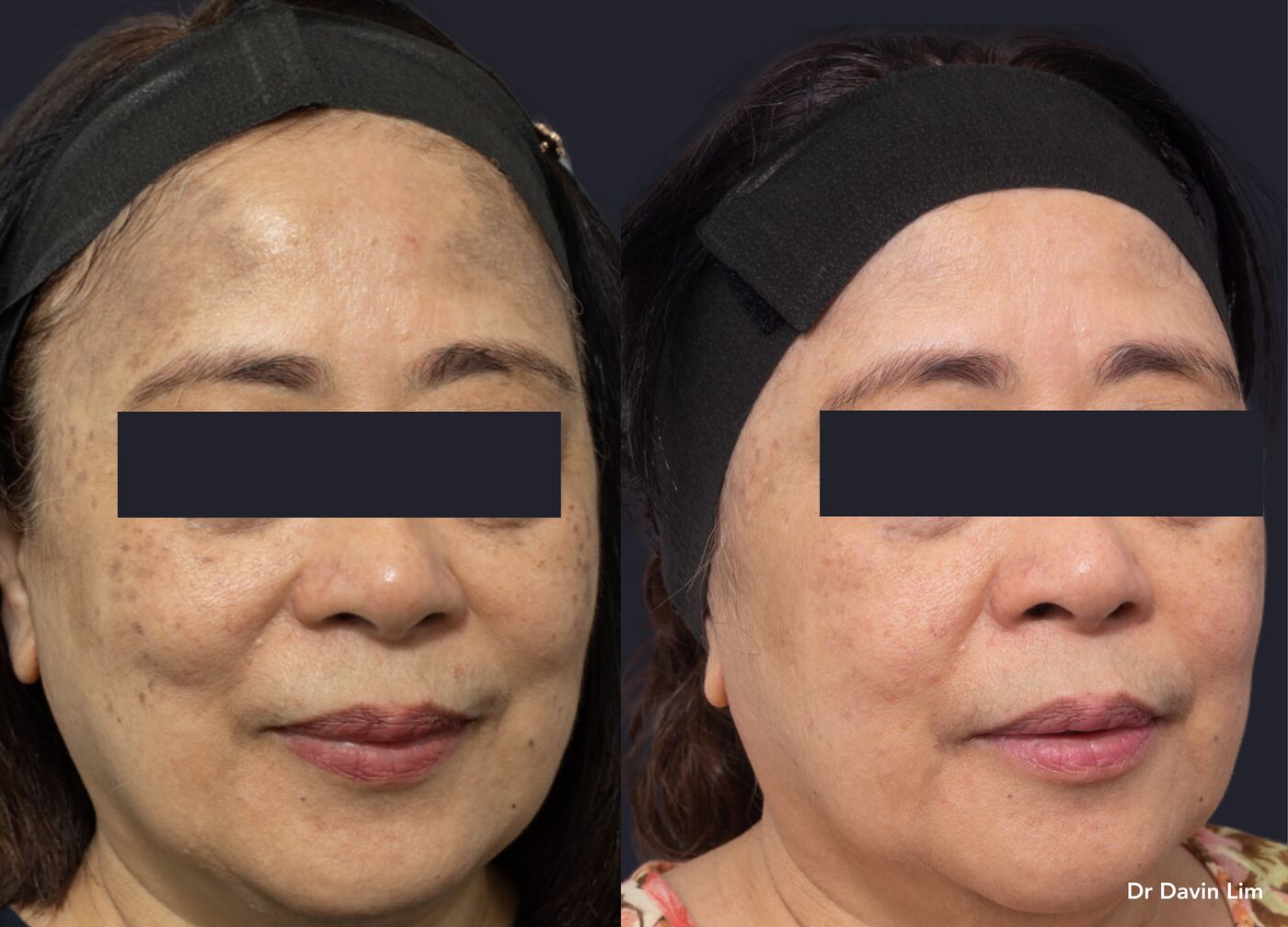
Sun spots sit high in the skin and are the most laser-responsive pigment there is. Most clear in one to three sessions. Treated spots darken, then flake away over seven to ten days.
Melasma
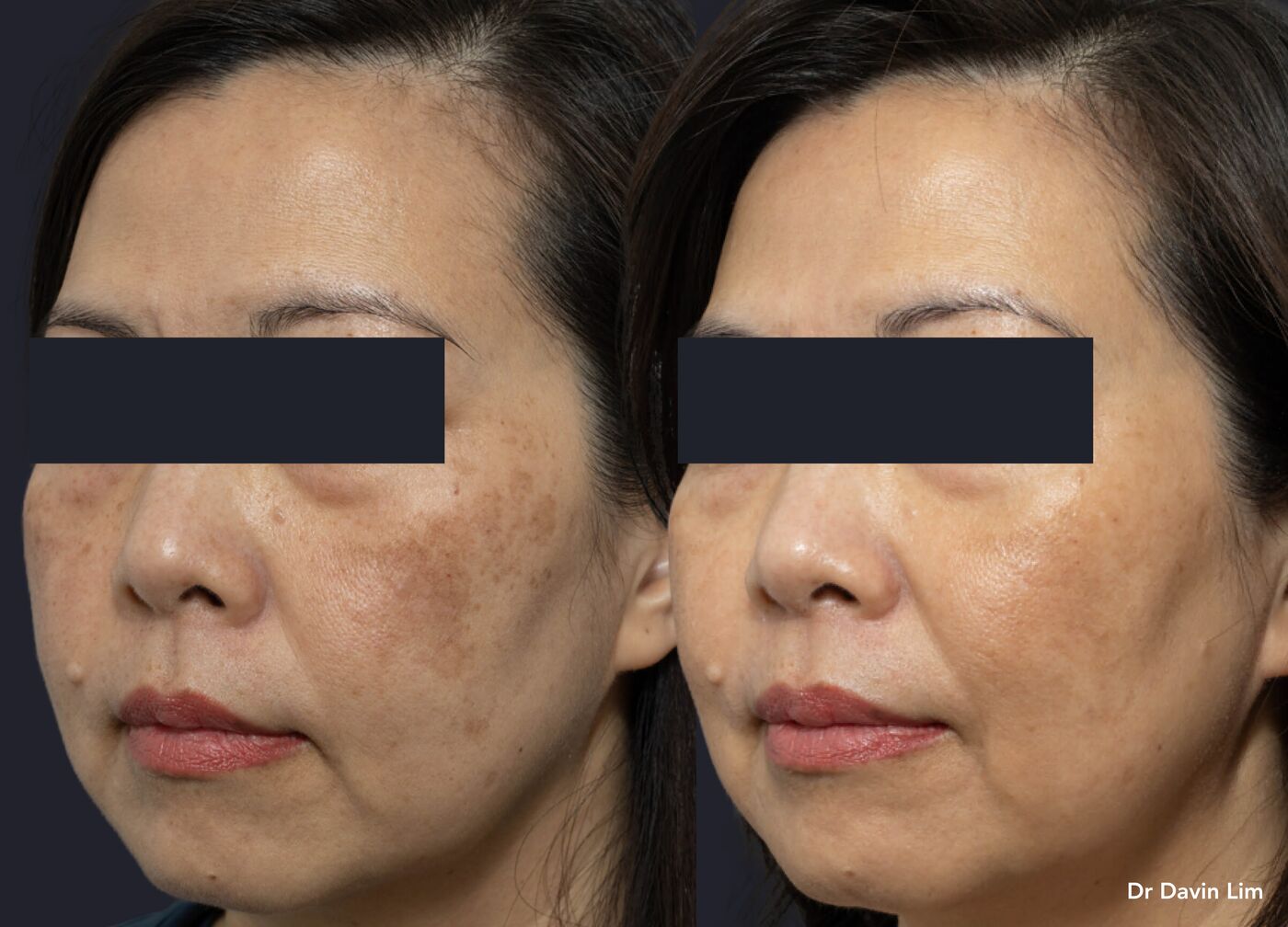
Low-energy picosecond sessions, alongside protection and topicals, clear 80–85% of melasma in most patients over around four sessions. The laser speeds up clearance but does not cure the tendency, and it must be used conservatively to avoid white spots.
Post-inflammatory pigment
The brown marks left after acne or injury usually fade with sunscreen and inhibitors. Picosecond laser can shorten that time, with less risk of re-inflaming the skin than older lasers.
Birthmarks and dark circles
Pigmented birthmarks such as café-au-lait macules and naevus of Ota often respond, after a test patch. Around one in five café-au-lait lesions will not. For dark circles, a pigment laser only helps the pigment; it cannot fix shadowing or blood vessels.
Lasers accelerate clearance. They do not cure the tendency.
Why acne scars sit last
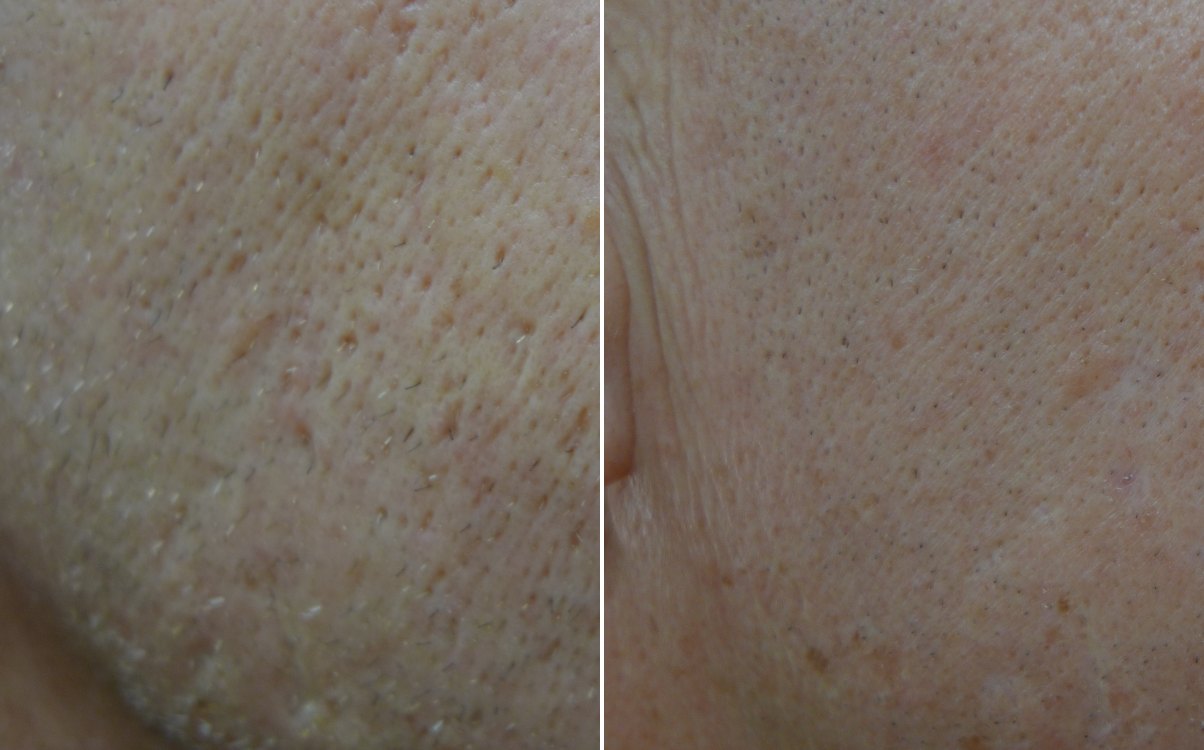
There is published evidence for picosecond lasers with a focusing lens in acne scarring, but in my hands the improvement is modest. For scars, subcision, TCA CROSS and resurfacing come first. I use pico laser mainly for the pigment and fine texture that sit alongside scars.
Common questions
References
Wu DC, Goldman MP, Wat H, Chan HHL. A systematic review of picosecond laser in dermatology: evidence and recommendations. Lasers Surg Med 2021;53(1):9–49.

Dr Davin Lim is a consultant dermatologist with a procedural practice in lasers, scar revision and pigmentation. This article is general information and not personal medical advice.