Picosecond lasers have changed how we treat pigmentation. They are my workhorse for melasma, and I use them every week. But they are increasingly marketed as a laser without risk, and that is not quite true. This article explains what a picosecond laser does, why melasma is a special case, what our own research found, and how to lower the chance of a problem.
What is a picosecond laser?
A picosecond laser fires pulses of light lasting trillionths of a second. At that speed, the energy shatters pigment by pressure (a photoacoustic effect) rather than by cooking it with heat. Common examples include PicoSure Pro (755 nm) and 1,064 nm picosecond devices.
Less heat means less injury to the skin around the pigment, and less of the rebound darkening that heat can trigger. That is why picosecond lasers are generally safer than older nanosecond (Q-switched) lasers, particularly in Asian, South Asian, Middle Eastern and other darker skin types.
Why melasma is different from a sun spot
A sun spot is a single, well-defined collection of pigment. It is usually treated once or twice with a targeted pulse, and the spot flakes away over a week or so.
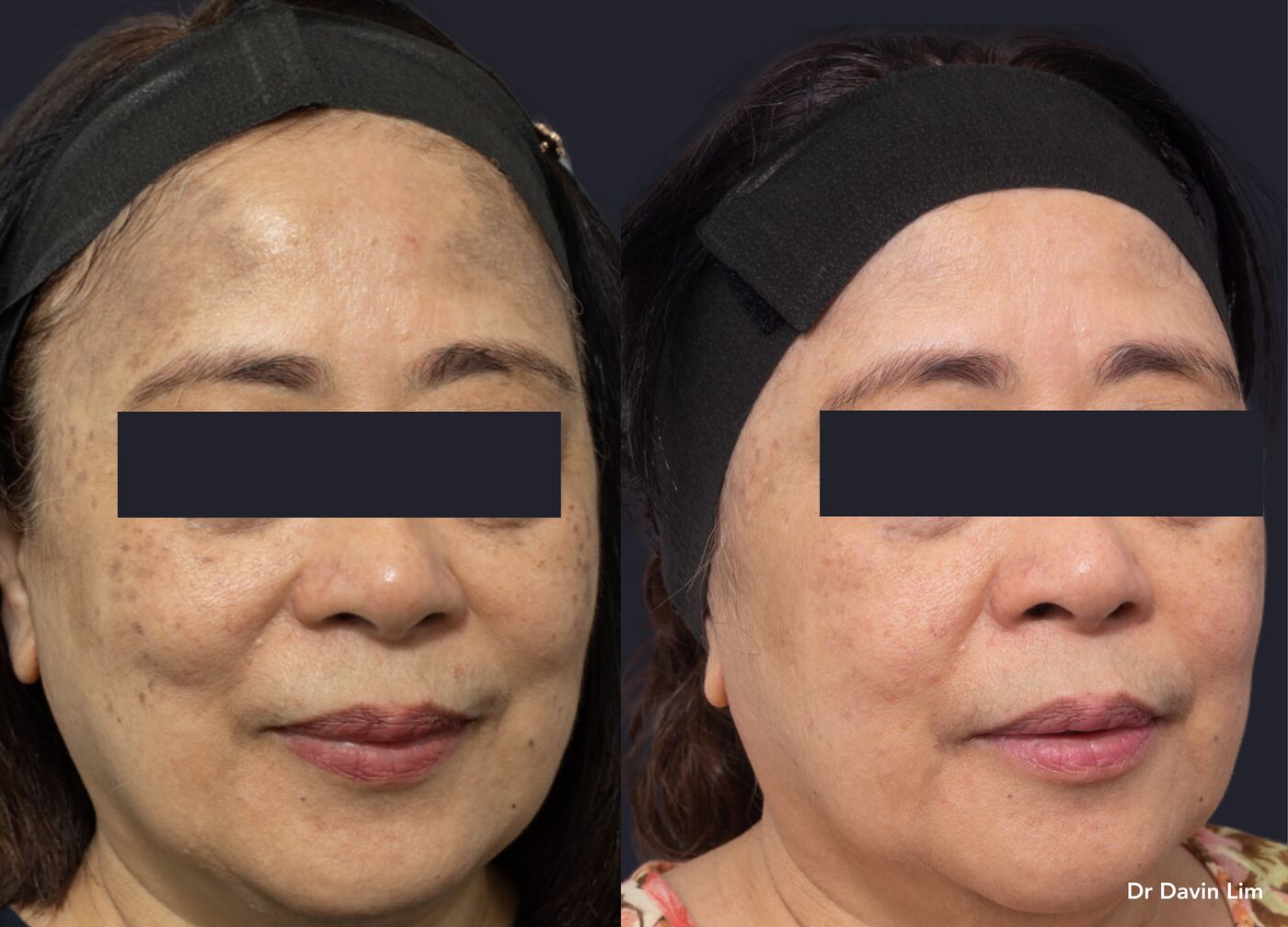
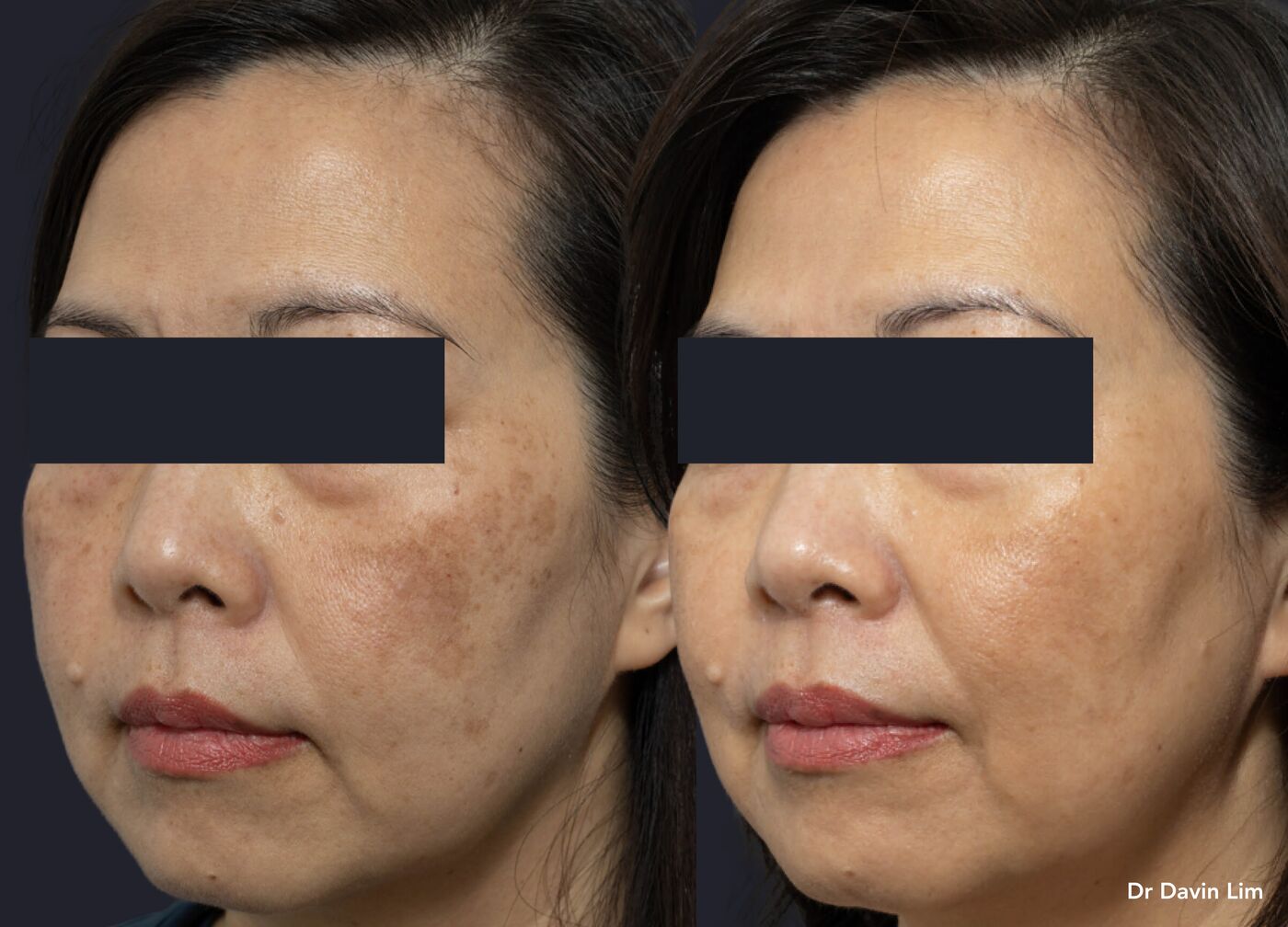
Melasma behaves very differently. It is a chronic condition driven by hormones, sunlight, visible light, heat and genetics. It is treated with repeated, low-energy passes over broad areas of the face, often called "laser toning", session after session. It is that cumulative exposure, over wide areas and many sessions, that deserves caution.
What our study found
With my colleague Dr Xiaozhun Hang, I reviewed 796 patients treated with 755 nm and 1,064 nm picosecond lasers for melasma in an Australian dermatology setting. Most had skin types III to VI. Patients had between two and six sessions, spaced four to twelve weeks apart.
Three in every thousand patients (0.38%) developed new, well-defined areas of lighter skin within the treated zone. These had not recovered at six months. When examined under the microscope, the pigment cells were still present in normal numbers, but they were carrying far less pigment than they should. In other words, the cells had not been destroyed; they had stopped working normally.
Preserving the structure of a pigment cell does not guarantee that it will keep working normally.
Why does hypopigmentation happen?
Microscopy studies across pigment lasers show a consistent pattern: pigment cells survive, but their branches (dendrites) retract and they pass less pigment on to surrounding skin cells. Clinically, this can appear as small, confetti-like white spots, known as punctate leukoderma.
Although picosecond lasers are described as working by pressure, they still produce some heat, particularly when pulses stack on the same spot. Over many passes and many sessions, small amounts of injury can add up.
What increases the risk
- Treating the same area repeatedly within one session (high treatment density or overlap).
- Slow hand speed, which stacks pulses on the same spot.
- High pulse repetition rates.
- Re-treating the same areas across many sessions without enough time between them.
- Chasing faster results with higher energy rather than a better overall plan.
How I reduce the risk
The laser is never the first step in melasma. Every plan starts with photoprotection (a hat and a tinted SPF 50+ applied properly), followed by four to eight weeks of pigment suppression with prescription topicals and, where suitable, tranexamic acid. Only then do we add laser, and we use it conservatively.
- Low energies, aiming for mild redness without whitening of the skin.
- A limited number of passes per session.
- At least four weeks between sessions.
- Standardised photographs at each visit to spot early lightening.
- Stopping or changing the plan at the first sign of white spots.
What this means if you have melasma
Picosecond laser remains one of the most effective tools we have for melasma. Most patients do very well. But it should be one part of a staged, long-term plan, delivered by someone who understands melasma and who is watching for early changes, rather than a series of sessions sold as a stand-alone cure.
Questions to ask before pico laser for melasma
- Has my melasma been diagnosed properly, and is it epidermal, dermal or mixed?
- What should I do for my skin before the first laser session?
- How many sessions, and how far apart?
- What energy and how many passes will you use?
- What happens if I notice white spots?
Common questions
References
Hang X, Lim DS. Hypopigmentation following picosecond laser treatment for melasma: a case series. Lasers Surg Med 2025;57:777–787.
Hang X, Lim DS. Picosecond lasers and hypopigmentation: translating histologic insights into clinical caution. Dermatol Surg 2026.

Dr Davin Lim is a consultant dermatologist with a procedural practice in lasers, scar revision and pigmentation. This article is general information and not personal medical advice.