Over the past two decades, acne scar treatment has been reshaped by a flood of new lasers, radiofrequency and energy devices. They are valuable tools. But with new machines arriving at a frantic pace, it is easy to forget that some of the most effective scar treatments use no machine at all.
Start with the scar, not the device
Good scar revision is based on the patient in front of you: the scar types present, their depth and severity, skin type, age, the downtime you can accept, your timeframe and your budget. That plan may use devices, manual techniques, or most often a combination of both.
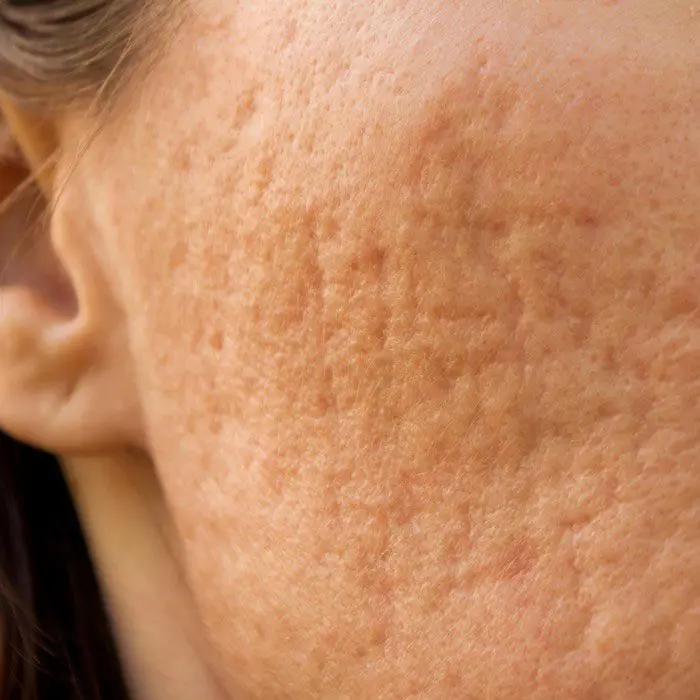
A simple way to think about acne scars is by depth: superficial, deep, or a mixture. Deep scars include ice pick, rolling and deep atrophic scars. Superficial scars include shallow boxcar and broad, linear scars.
Ice pick scars: TCA CROSS and punch excision
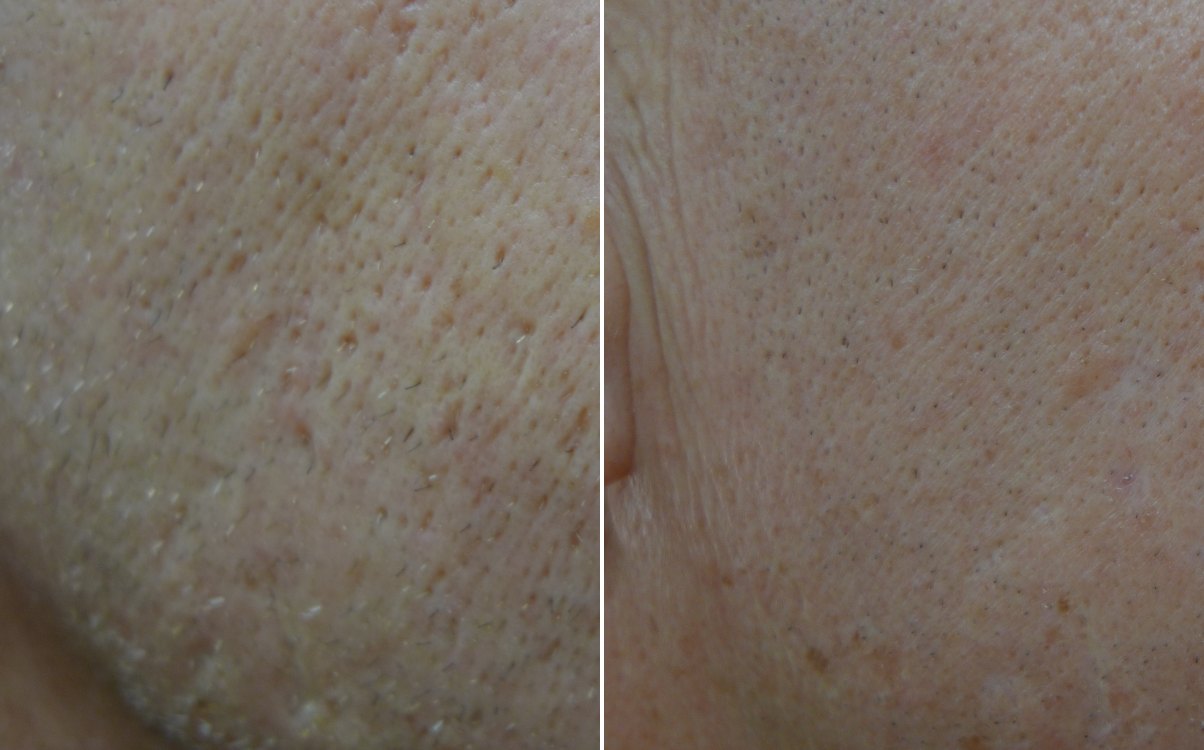
Ice pick scars are narrow, deep scars that look like small punctures in the skin. They are among the most common acne scars and, despite advances in laser technology, often resist it.
Chemical reconstruction of skin scars (CROSS) uses a high-strength acid, such as TCA, applied precisely into each scar with a fine applicator. It stimulates collagen inside the scar while leaving the surrounding skin alone, which limits downtime and cost.
For faster results, punch excision removes the scar with a tiny circular blade and closes it. I use fine follicular unit extraction (FUE) punches from 0.6 to 1.5 mm, which stay sharp for far longer than standard biopsy punches.
Boxcar scars: focal peels
Superficial boxcar and broad scars respond well to deep peeling agents applied only to the scar. We described a simple technique using a fine brush to paint TCA into each scar. Treating only the scar reduces side effects, speeds recovery and lowers the cost for the patient.
Rolling scars: subcision
Rolling scars are caused by bands of scar tissue tethering the skin down to deeper layers, creating an undulating surface. Subcision uses a needle or cannula under the skin to release those bands. No surface laser, however advanced, can cut a tether.
The best results usually come from combining manual methods with devices, in the right order.
Where lasers and devices fit
Energy devices still have an important role. Fractional and fully ablative lasers resurface texture and blend the edges of scars after they have been lifted or released. Vascular lasers treat the red marks that follow acne. The key is sequence: release and lift the deep scars first, then resurface.
A typical combined plan
- Clear active acne first, often with isotretinoin.
- Treat ice pick scars with TCA CROSS or punch excision.
- Release rolling scars with subcision.
- Treat boxcar scars with focal TCA or elevation.
- Finish with laser resurfacing to refine texture.
Choosing who treats your scars
Ask whether the practitioner personally performs manual techniques such as subcision, TCA CROSS and punch excision, as well as lasers. A clinic that only owns a laser will tend to recommend laser for every scar type.
Common questions
References
Lim D. Are we too reliant on energy-based devices for the treatment of acne scarring? Opin Prog Cosmet Dermatol 2022;2(3):72–74.
Sun C, Lim D. Trichloroacetic acid paint for boxcar and polymorphic acne scars. Dermatol Surg 2022;48(2):214–218.

Dr Davin Lim is a consultant dermatologist with a procedural practice in lasers, scar revision and pigmentation. This article is general information and not personal medical advice.